A Practical Guide to Balcony Herb Gardens
- Garden At Home
- 3 hours ago
- 6 min read
A bare balcony can become one of the most useful parts of your home with a few well-chosen herb pots. This guide to balcony herb gardens is designed for busy residents who want fresh flavour close to the kitchen, without creating another demanding weekend job. Whether you have a compact Brussels flat balcony or a larger terrace in Tervuren, the key is to work with the conditions you actually have: light, wind, weight limits and the time you can give it.
Herbs are forgiving when the basics are right, but they are not all the same. A sunny railing may suit rosemary perfectly and leave mint looking scorched. A sheltered corner can keep parsley productive for months, while a small pot with no drainage can quickly turn any plant into a disappointment. Good planning at the start means less replacing, less mess and better harvests.
Start with the balcony, not the herb list
Before buying plants, spend a day noticing what happens on your balcony. Count the hours of direct sun, and pay attention to wind. Tall buildings can create surprisingly strong gusts, while covered terraces may be bright but receive little direct sunlight. These details matter more than choosing the most attractive herbs at the garden centre.
South- and west-facing balconies usually suit sun-loving Mediterranean herbs, including rosemary, thyme, sage and oregano. They prefer at least six hours of direct sun and dislike sitting in wet compost. East-facing balconies often provide gentler morning sun, which is excellent for parsley, chives, coriander and basil during warmer months. On a north-facing or heavily shaded balcony, mint, parsley and chives are the more realistic choices. You can still grow useful herbs in shade, but growth will be slower and flavours may be milder.
Also check your building rules before fixing planters to a railing. Safety comes first: containers must be secure, and any water runoff should not affect neighbours below. Large ceramic pots can look lovely, but they become very heavy once filled with wet compost. Lightweight resin or recycled plastic containers are usually a sensible option for upper-floor balconies.
The guide to balcony herb gardens: choose the right pots
One large planter is rarely the easiest answer. Herbs have different watering needs, so grouping plants by preference makes care much simpler. Put rosemary, thyme, sage and oregano together in a free-draining planter. Keep moisture-loving parsley, chives and coriander in a separate container. Mint deserves a pot of its own because it spreads enthusiastically and can take over shared space.
Every container needs drainage holes. This is non-negotiable in Belgium, where a run of rainy days can arrive just as quickly as a warm spell. Use saucers only where necessary, and empty excess water after heavy rain rather than letting roots stand in it. A quality peat-free multipurpose compost works for most herbs. For Mediterranean varieties, mix in horticultural grit or a little perlite to improve drainage.
Pot size affects how often you will need to water. Small pots dry out quickly in summer and are easily knocked over in wind. As a useful starting point, choose containers at least 20 to 25 cm wide for individual herbs, with more room for rosemary and mint. A deeper trough is better than a shallow window box if you want several plants to establish well.
Pick herbs you will genuinely use
The best balcony garden is not a catalogue of plants. It is a small collection that earns its place in your cooking. If you regularly make pasta, start with basil, oregano and parsley. If you cook roast vegetables or grilled food, rosemary and thyme are reliable favourites. Chives are useful in salads, omelettes and sauces, and they cope well with cooler weather.
Basil is rewarding but a little more demanding than many people expect. It needs warmth, regular watering and protection from cold nights. Do not place it outside too early in spring. In contrast, rosemary and thyme tolerate dry conditions once established, but they can struggle in constantly damp compost. Coriander is quick to bolt in heat, so sow or buy small batches through spring and late summer rather than expecting one plant to last all season.
Perennial herbs such as rosemary, thyme, sage, oregano, chives and mint can return year after year if cared for properly. Basil and coriander are generally treated as annuals. This mix gives a balcony garden a dependable backbone while leaving space for seasonal favourites.
A simple watering routine beats good intentions
Most failed herb gardens are not caused by a lack of enthusiasm. They fail because watering is either forgotten for several hot days or done too often during wet weather. Check the compost with a finger before watering. If the top few centimetres are dry, water thoroughly until it begins to drain from the bottom. If it is still damp, leave it.
In summer, a sunny balcony may need watering every day, especially if it is exposed to wind. Morning is usually the best time. Water the compost around the base of each plant rather than soaking the leaves, and avoid a light daily sprinkle that only wets the surface. During cool, damp weeks, reduce watering sharply.
Feed container herbs lightly. A diluted liquid feed every few weeks during active growth can help, particularly for basil and parsley, but too much fertiliser can encourage soft growth with less flavour. Refreshing the top layer of compost in spring is often enough for established perennial herbs.
Harvesting is part of maintenance
Regular picking keeps herbs compact and productive. Take a few stems or leaves often rather than stripping a plant all at once. With basil, pinch shoots just above a pair of leaves to encourage bushier growth. Remove flower buds if your goal is leaf production. For rosemary and thyme, take small tips of young growth and avoid cutting back into old, woody stems.
Parsley and chives should be cut from the outside first, leaving the centre to continue growing. Mint can be harvested generously, but trim it regularly to stop it becoming leggy. If a herb looks crowded, pale or tired by midsummer, it may need a larger pot, fresh compost or a little more light rather than more water.
A before-and-after approach for neglected balconies
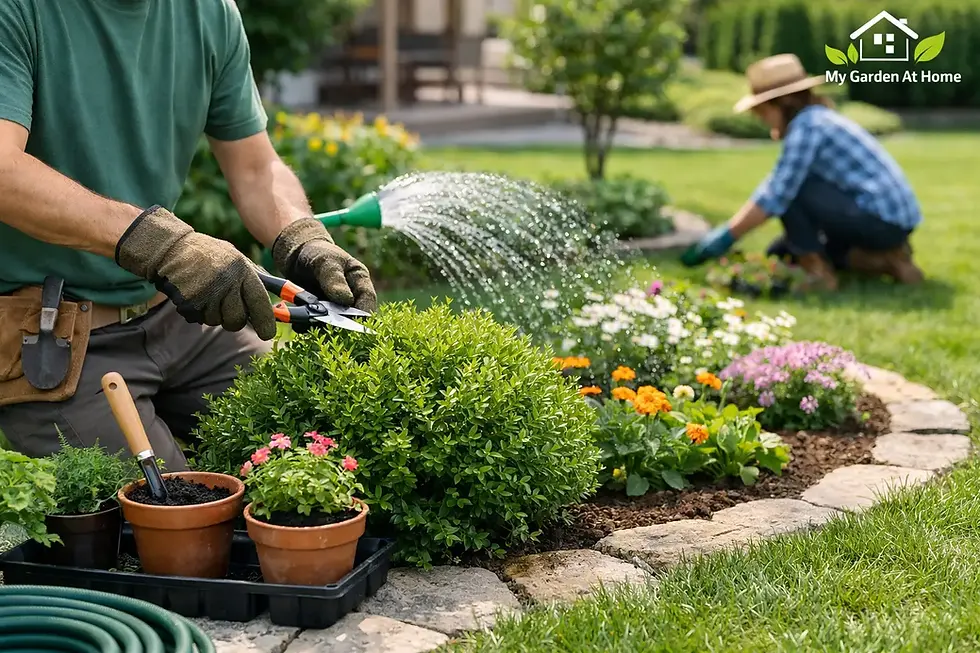
A balcony herb garden does not need to begin perfectly. We often see terraces where old pots, spent compost and tangled plants have been left after a busy winter. Before the tidy-up, the space feels cramped and uninviting. After clearing broken containers, cutting back tired growth, cleaning the surface and setting out a few purposeful planters, the same balcony can feel like an extension of the kitchen.
The practical lesson is to avoid trying to save every old pot. Keep healthy perennials that suit the light. Replace compacted compost and damaged containers. Create a clear route to the door and leave enough open floor space for a chair or small table. A neat arrangement of five thriving herbs is more enjoyable, and easier to maintain, than fifteen pots that need constant attention.
If you are renting, choose freestanding pots and movable shelves rather than permanent fixtures. If you travel frequently, larger containers, drought-tolerant herbs and a simple watering arrangement will be more successful than thirsty annuals. There is no single perfect balcony garden - there is only one that fits your home and routine.
Seasonal care in Belgium
Spring is the time to refresh compost, divide overcrowded chives and introduce new plants once frost risk has eased. Summer is about watering, harvesting and watching for aphids, especially on tender basil. A gentle rinse with water can remove small infestations before they become a larger problem.
In autumn, reduce feeding and remove spent annual herbs. Hardy rosemary, thyme, sage and chives can remain outdoors, although pots are more vulnerable to freezing than plants in the ground. Move containers against a sheltered wall, raise them slightly so water can drain, and protect delicate plants during prolonged hard frost. Basil should be brought indoors before cold nights arrive, though it may not thrive without a bright, warm position.
A well-kept herb balcony should feel useful rather than fussy. Start small, notice what thrives in your particular spot, and build from there. If your terrace needs clearing, pruning or a practical reset before you plant, My Garden At Home can help create a tidy, manageable outdoor space and provide a clear quote for the work.
Contact My Garden At Home
• WhatsApp: +32 466 900 281 • Email: info@gardenathome.be • Phone: +32 2 808 70 31 • Website: mygardenathome.be