Artificial Grass Versus Real Turf: Which Fits?
- Garden At Home
- 13 hours ago
- 6 min read
A lawn can make a garden feel finished, but the wrong choice can create years of avoidable work. When weighing up artificial grass versus real turf, the best answer depends less on what looks good on installation day and more on how you use the space, how much sun it receives and how much maintenance you are happy to arrange.
For busy households in Belgium, the decision often comes after a frustrating season of muddy patches, thin grass under hedges or a garden that has become difficult to manage after winter. Artificial grass can provide a consistently neat surface. Real turf brings the softer, living character that many homeowners still prefer. Both have a place, but they solve different problems.
Artificial grass versus real turf at a glance
Artificial grass offers an instant green result and does not need mowing, feeding or regular watering. It can be particularly useful in compact city gardens, shaded corners and family spaces where natural grass struggles to recover between uses. A quality installation also gives a tidy, even surface throughout the year.
Real turf is a living lawn. It changes with the seasons, supports soil health and remains cooler underfoot in warm weather. It does need mowing, edging, feeding, aeration and occasional repair, but a well-kept natural lawn has a depth of colour and texture that synthetic products cannot fully copy.
The practical question is not simply which option is easier. It is whether your garden needs a low-maintenance surface, a proper growing lawn, or a combination of both.
Start with how the garden is actually used
A lawn used for occasional sitting and children’s play has different needs from one that must look presentable every day outside a rental property or diplomatic residence. If dogs regularly run along the same route, real grass may wear down quickly. If a terrace garden has little soil depth and heavy shade, artificial grass may be the more realistic option.
On the other hand, a sunny family garden with room for grass to establish can be an excellent candidate for real turf. Natural grass absorbs rainwater, feels pleasant in summer and gives the garden a more relaxed appearance. It also works beautifully alongside borders, fruit trees and established planting.
For many properties, the strongest result is not an all-or-nothing decision. Artificial grass can work well in a narrow side garden or beneath play equipment, while real turf remains the centrepiece of the main garden. This approach keeps maintenance manageable without making the entire outdoor space feel artificial.
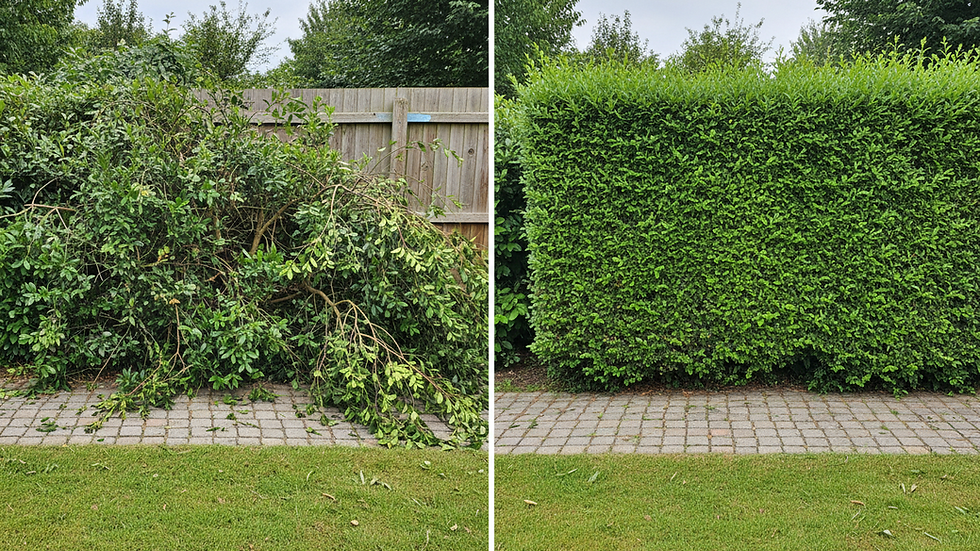
The before-and-after difference in a Waterloo garden
A recent type of job we often see in Waterloo begins with a lawn that looks beyond saving: compacted soil, bare areas close to the house, moss around the edges and a worn strip where the garden gate is used every day. From a distance, it can appear that artificial grass is the only sensible solution.
Before recommending a surface, the first step is to identify why the lawn failed. In one typical garden layout, dense shade from mature shrubs and poor drainage had left the back section muddy for much of winter. The lawn nearer the patio was thin because it received constant foot traffic. Simply laying new turf over those problems would have produced a short-lived improvement.
The better after-result came from dividing the space according to use. The high-traffic area was prepared as a durable, low-maintenance surface, while the remaining lawn was cleared, levelled, aerated and returfed after improving the soil. The garden regained a clean, cared-for appearance without losing the natural green area the owners enjoyed looking out on from the house.
That is the value of a proper assessment. A lawn should not be replaced just because it looks tired in March. Equally, a client should not be sold endless lawn treatments when the conditions make a conventional grass lawn impractical.
Cost is more than the installation price
Artificial grass usually costs more at the beginning. The visible grass is only part of the job. A lasting installation requires excavation, a stable sub-base, careful levelling, drainage planning, edging and secure fitting. Skipping preparation may lead to dips, lifted seams, poor water run-off or weeds appearing at the edges.
Real turf is generally less expensive to install, especially when the existing ground can be improved rather than fully rebuilt. However, it has ongoing costs. Mowing equipment, lawn feed, weed control, watering during dry spells and occasional renovation all need to be considered. If you use a regular garden maintenance service, those visits are part of the long-term cost too.
Over several years, artificial grass can be economical for a small, heavily used garden. In a larger garden, the upfront cost may be considerable, and a well-managed natural lawn can offer better value. Ask for a clear quote that separates groundwork from materials and aftercare, so you can compare like for like.
Drainage matters more than appearance
Belgian rainfall is one of the biggest factors in this decision. Artificial grass is permeable, but only if the base beneath it has been built correctly. Water must be able to pass through the surface and drain away. On poorly prepared ground, water can sit below the grass, creating unpleasant smells, unstable areas or persistent dampness.
Natural turf also needs drainage, but it can help manage rainwater when the soil is healthy and not compacted. A lawn that is constantly wet may need aeration, top dressing, improved grading or changes to surrounding planting. Sometimes a blocked drain or a low point near the property is the real issue.
This is why an inspection is worthwhile before committing to either option. A neat lawn surface cannot correct a drainage problem by itself.
Maintenance: less work is not no work
Artificial grass removes the weekly mowing routine, which is a major advantage for frequent travellers, landlords and owners of small gardens. It still benefits from care. Leaves, mud, pet hair and debris need removing, and the fibres should be brushed occasionally to keep them upright. Pet areas may need rinsing and cleaning, particularly in warm weather.
Real turf requires more regular attention, but not every lawn needs a perfect striped finish. A sensible programme of mowing, seasonal feeding, edging and weed control can keep it healthy without turning it into a demanding project. Where the lawn is thin, early action is cheaper and simpler than allowing bare patches and weeds to take over.
For expats and busy families, recurring visits can make real turf entirely practical. The garden is maintained at the right times of year, and small issues are dealt with before they become a major clean-up job.
Appearance, comfort and environmental considerations
Modern artificial grass can look convincing from a distance, especially in a small enclosed garden. It remains green during dry weather and does not become muddy after rain. Yet it can become hot in direct sun, and it lacks the changing texture of a living garden. Some homeowners also find that it looks less natural once surrounded by mature planting.
Real turf gives birds, insects and soil organisms a functioning habitat, and it helps keep the garden cooler. Its appearance is seasonal: it may look less pristine during drought, wet winter weather or after intensive use. For many people, that is part of its appeal. A real lawn feels connected to the rest of the garden rather than laid over it.
If environmental impact is a priority, consider the full picture. Artificial grass avoids lawn chemicals and regular mowing, but it is a manufactured material with a limited lifespan. Real turf requires resources to maintain, but it is living ground cover that can be repaired and renewed.
Choosing the right option for your property
Choose artificial grass when the garden is small, heavily used, deeply shaded or difficult to maintain consistently. It can also be a practical finish for certain balcony, roof terrace and courtyard spaces, provided the structure and drainage are suitable.
Choose real turf when you have reasonable sunlight, usable soil and the desire for a living garden. It is especially rewarding in larger gardens where a lawn can be part of a balanced planting scheme rather than a surface that must withstand constant wear.
If your lawn has become patchy, muddy or overgrown, do not assume it needs replacing. A professional visit can show whether careful recovery, new turf, artificial grass or a mixed solution will give the best long-term result. The right choice should leave you with a garden you can enjoy, not another task waiting for the weekend.
Contact My Garden At Home
• WhatsApp: +32 466 900 281 • Email: info@gardenathome.be • Phone: +32 2 808 70 31 • Website: mygardenathome.be