How to Prune Hydrangeas Correctly in Belgium
- Garden At Home
- 2 days ago
- 6 min read
Updated: 13 hours ago
A hydrangea that looks untidy in February can be tempting to cut back hard. That one decision, however, can mean the difference between a shrub covered in flowers and a healthy-looking plant with no blooms at all. Knowing how to prune hydrangeas correctly starts with identifying the variety in your garden, not simply following a date on the calendar.

For gardens in Belgium, late winter and early spring bring another complication: a mild week can be followed by a sharp frost. Prune too early or too severely and vulnerable new growth may suffer. Leave every old flower head in place for too long and the plant can become congested, weak and difficult to manage. The right approach is practical, gentle and based on the wood your hydrangea flowers from.
How to Prune Hydrangeas Correctly: First Identify the Type
Most pruning mistakes happen because different hydrangeas are treated as though they were the same plant. They are not. Some form their flower buds on last year's stems, often called old wood. Others flower on fresh growth made in the current season, known as new wood.
The familiar mophead and lacecap hydrangeas, usually Hydrangea macrophylla, normally flower on old wood. These are common in Brussels gardens, where their blue, pink or purple flowers brighten shady borders and courtyards. Their stems already carry next season's potential flower buds through winter, so cutting every stem down to the base removes those blooms.
Panicle hydrangeas, such as Hydrangea paniculata varieties with cone-shaped white or pink flowers, are much more forgiving. Smooth hydrangeas, including Hydrangea arborescens varieties, also bloom on new wood. These can be cut back more confidently in late winter because they will produce flowering shoots as the weather warms.
Oakleaf hydrangeas are another old-wood type and should be pruned lightly. Climbing hydrangeas generally need only a tidy after flowering, with long or badly placed shoots shortened to keep the plant within its space.
If you inherited a hydrangea with the house and do not know its name, do not guess with a hard prune. Look at its flower shape, check whether old stems have fat buds near their tips, and use a cautious approach for one season. A light tidy is far safer than removing a year's flowers.
When to Prune Hydrangeas in Belgium
For old-wood hydrangeas, wait until the worst winter frosts have passed. In many Belgian gardens, this is around late February to April, depending on exposure and local conditions. Sheltered city gardens may wake earlier than open gardens in Tervuren or Waterloo, where colder overnight temperatures can linger.
The faded flower heads are not just decorative during winter. On mopheads and lacecaps, they offer a little protection to the buds beneath them. Leave them in place through the coldest months, then cut each flower head back in spring to the first strong pair of healthy buds below it.
Panicle and smooth hydrangeas can be pruned from late winter into early spring, before strong new growth begins. A February or March prune is often suitable, but avoid working on stems when they are frozen or during very wet conditions. Clean cuts are easier for the plant to recover from and less likely to leave damaged tissue.
If an old-wood hydrangea has become oversized, do not try to solve the problem in a single weekend. Reduce it over two or three years, removing a few of the oldest stems at ground level each year. This keeps the shrub flowering while allowing younger, stronger stems to take over.
A Practical Pruning Method for Each Hydrangea
Start with clean, sharp secateurs. For thick, old branches, use loppers rather than forcing small secateurs through woody stems. Wipe tools clean before starting and between plants if you notice disease, particularly blackened or spotted stems.
Mophead and lacecap hydrangeas
Begin by removing dead, damaged or very thin stems at the base. Then take each faded flower head and trace the stem down to the first pair of plump, healthy buds. Make a clean cut just above those buds. Do not cut low into bare, older wood unless you are deliberately removing an unproductive stem from the base.
A mature shrub may also benefit from thinning. Remove up to one quarter of the oldest stems at ground level. This brings light and air into the centre, reduces congestion and encourages replacement growth. Keep the strongest younger stems, as these are likely to carry the next display of flowers.
Panicle hydrangeas
Panicle hydrangeas respond well to a more structured prune. Cut last season's growth back to two or three pairs of buds from the main framework. This produces sturdy new stems and generally larger flower heads. If you prefer a taller, looser shrub with more but smaller blooms, prune less severely.
A hard prune is useful where a panicle hydrangea has become too tall or leggy, but there is a trade-off. Strong regrowth can create large blooms that become heavy after rain. In exposed gardens, leave a stronger framework of stems to help support the display.
Smooth hydrangeas
Smooth hydrangeas can be cut back to around 20 to 40 centimetres from the ground in late winter. Leave healthy buds where possible. This encourages vigorous new shoots that flower later in summer.
That said, cutting all stems very low each year can lead to soft, long growth and heavy flowers that flop. If this has happened in your garden, leave some stems slightly longer next season. The plant will develop a more supportive structure.
The Cuts That Cause Missing Flowers
The most common error is treating a mophead hydrangea like a panicle hydrangea. Cutting it right down in spring may produce plenty of leaves but few, if any, flowers that summer. The plant has not failed. Its flowering stems were simply removed.
Avoid shearing hydrangeas into a neat ball. This creates a dense outer shell of growth, shades the centre and leaves you with a shrub that looks clipped rather than naturally full. Hydrangeas are best pruned stem by stem, with each cut made for a reason.
Also resist pruning late in autumn unless you are removing a broken or diseased branch. At that point, old-wood varieties are already preparing buds for the following year. Winter tidying can wait, and the faded heads often look attractive when touched by frost.
Do not overlook the conditions around the plant either. A hydrangea in dry soil, deep shade or a very exposed position may have fewer flowers regardless of pruning. Water during dry spells, add organic mulch around the roots and avoid piling mulch directly against the stems.
A Waterloo Garden: From Heavy and Bare to Flowering Well
On a recent Waterloo garden visit, the issue was not a lack of care but too much enthusiastic pruning. A large mophead hydrangea beside a terrace had been cut to knee height every spring. It leafed out strongly, but the owner had seen very few flowers for two years.
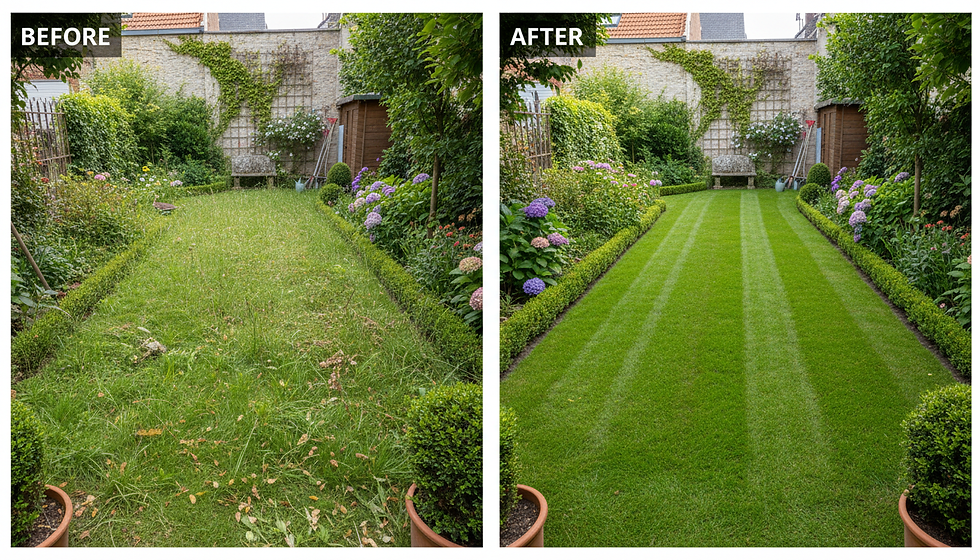
Prune Hydrangeas Correctly in Belgium - Rather than cutting it back again, our team removed only dead wood and several of the oldest, crowded stems from the base. The remaining live stems were shortened carefully to healthy buds. We also cleared the dense weeds around the root area and added mulch to help retain moisture through warmer weather.
The immediate after-result was a lighter, more balanced shrub with space around its base, not a severely reduced plant. The real improvement came later, when preserved buds developed into flowering shoots. This is often the lesson with hydrangeas: the neatest-looking winter prune is not always the one that gives the best summer garden.
Prune Hydrangeas Correctly in Belgium - When It Makes Sense to Call a Garden Team
Pruning one compact hydrangea is straightforward once you know its type. The job becomes more demanding when a border contains several varieties, shrubs have been neglected for years or climbing hydrangeas have grown around walls, fences and gutters.
Professional help is useful when you want the garden cleared, pruned and left tidy in one visit. It can also save time after winter, especially for busy homeowners, landlords and property managers who need a presentable outdoor space without trial and error. An insured team can assess what should be removed, what needs another season and how pruning fits with lawn care, weeding and general garden maintenance.
A careful hydrangea prune is an investment in the flowers you will enjoy months from now. When in doubt, preserve healthy buds, remove only what the plant no longer needs and let the shrub keep its natural shape.
Contact My Garden At Home
• WhatsApp: +32 466 900 281
• Email: info@gardenathome.be
• Phone: +32 2 808 70 31
• Website: mygardenathome.be