


How to Start a Vegetable Garden in Brussels
- Garden At Home
- Jul 22
- 6 min read
Updated: Jul 23
A bare patch of lawn, an unused corner beside the terrace, or even a sunny balcony can produce far more than a pleasant view. Learning how to start a vegetable garden is mainly about making a few sensible choices early: where the sun falls, how water drains, what your household will actually eat, and how much time you can give it each week.
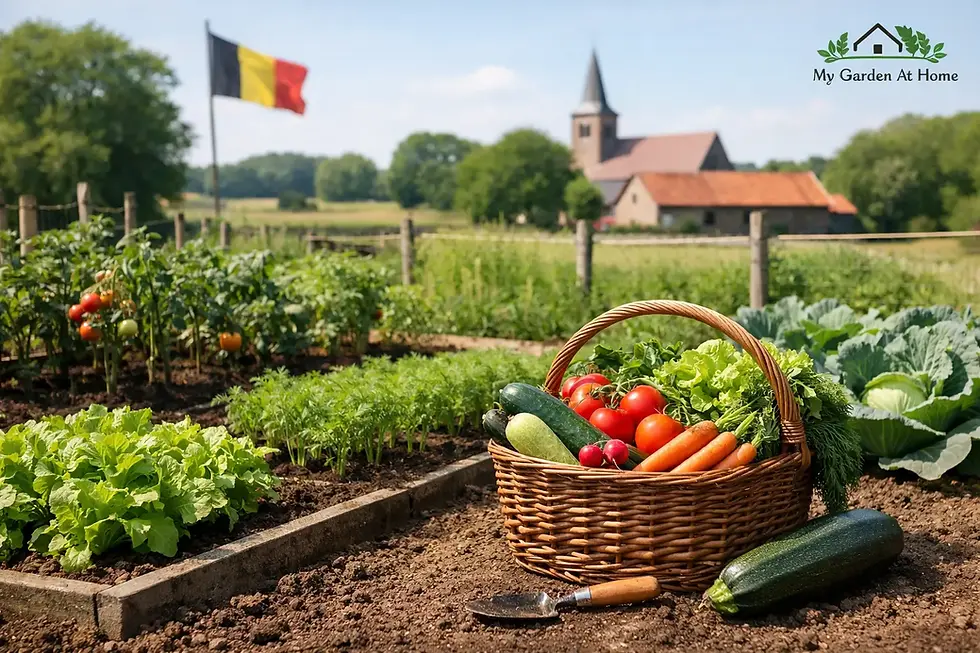
For busy households in Brussels and the surrounding areas, the best vegetable garden is rarely the largest one. It is the one that is easy to reach, simple to maintain and rewarding from the first harvest. Start small, learn what works in your space, then expand when you are ready.
How to start a Start a Vegetable Garden in Brussels with the right site
Vegetables need light before they need almost anything else. Choose a location that receives at least six hours of direct sun in late spring and summer. Morning sun is particularly useful because it dries foliage after dew and rain, helping to reduce fungal problems. A south- or south-west-facing area is usually a good starting point, but watch the garden at different times of day before committing to a spot.
Avoid planting directly under established trees or close to dense hedges. Their roots compete for water and nutrients, while their shade can turn a promising bed into a disappointing one. Also consider convenience. A bed beside the kitchen or near the patio is more likely to be watered, weeded and harvested than one hidden at the end of a long garden.
Start a vegetable garden in Brussels - If your garden has heavy soil, poor drainage or lots of roots, raised beds are often the practical answer. They give you control over the growing medium, warm up sooner in spring and create clear paths that do not turn muddy after Belgian rain. The trade-off is that raised beds dry out faster in warm weather and require good-quality soil to fill them.
For a flat or balcony, use containers with drainage holes and place saucers carefully so water does not stain the surface below. Pots are ideal for herbs, salad leaves, tomatoes, chillies and compact courgette varieties, but they need more regular watering than a garden bed.
Test and improve the soil before planting
Good soil holds moisture without becoming waterlogged, drains excess rain and contains enough organic matter to feed plants gradually. You do not need laboratory-perfect conditions to begin, but it is worth understanding what you have.
Dig a small hole after rain. If water remains in it for many hours, drainage needs attention. If the soil feels sticky and clumps heavily, it may contain a lot of clay. Clay soil is common in many local gardens and can be productive, but it benefits from compost and patient improvement rather than repeated digging when wet. Sandy soil drains quickly and needs organic matter to hold water and nutrients.
Spread a generous layer of well-rotted compost across the bed before planting and work it into the top layer of soil. This improves structure, supports soil life and reduces the need for frequent feeding later. Avoid using fresh manure around young plants, as it can be too strong and may introduce weed seeds.
A simple soil test can also reveal whether the pH is very acidic or alkaline. Most vegetables are comfortable in soil that is roughly neutral. Do not add lime or other amendments on guesswork alone. In established gardens, the safer approach is to improve the soil with compost and observe how plants perform over a season.
Choose easy crops for your first season
A new vegetable plot can become expensive and overwhelming if it is filled with unfamiliar crops. Choose vegetables that suit your cooking habits and offer a quick or reliable return. Salad leaves, radishes, rocket, spinach, beetroot, peas, beans, courgettes and herbs are sensible first choices.
Tomatoes are popular, especially in pots close to a warm wall, but they require support, regular watering and some attention to prevent disease. In a wet summer, outdoor tomatoes can struggle with blight. A greenhouse, sheltered position or a more disease-resistant variety can improve your chances, but it is wise not to make tomatoes the entire plan.
Potatoes can be satisfying in a larger garden, though they take space and are not always the best use of a small bed. Courgettes are productive but become large quickly. One healthy plant may be enough for a household. Leafy crops are excellent for compact spaces because you can pick a little at a time and sow more every few weeks.
Buy young plants for your first year if you want a quicker start and less uncertainty. Growing from seed costs less and gives you more variety, but it takes timing, protection and a little practice. Many gardeners use both: young tomato and courgette plants for dependable summer crops, then easy seeds for salads, beans and radishes.
Plan the bed so plants have room to grow
Crowding is one of the most common beginner mistakes. Small seedlings can look far apart in April, then compete fiercely by June. Follow the spacing guidance on seed packets or plant labels, especially for courgettes, cabbages and tomatoes.
Put taller crops where they will not shade shorter ones. In most gardens, that means placing climbing beans, peas or supported tomatoes on the north side of the bed, with lower salad crops in front. Leave enough room to walk around the plot without stepping on the soil. Compacted ground drains poorly and makes it harder for roots to spread.
Succession sowing keeps the garden productive. Instead of planting every lettuce seed on one weekend, sow a small row every two or three weeks. You will avoid a sudden glut followed by empty soil. Once early peas, radishes or spinach finish, use that space for another crop rather than leaving it bare.
Water deeply and keep weeds under control
Newly planted vegetables need consistent moisture while roots establish. After that, it is better to water deeply a few times a week than to sprinkle lightly every day. Deep watering encourages roots to grow downwards, where they are more resilient during dry periods. Water the soil rather than the leaves, ideally in the morning.
The exact schedule depends on rain, wind, soil type and whether you are growing in pots. Check by pushing a finger a few centimetres into the soil. If it is dry beneath the surface, water thoroughly. Containers may need attention every day during a hot spell, while a mulched bed may hold moisture for longer.
A layer of compost, leaf mould or other suitable mulch around established plants helps retain water and slows weed growth. Keep it a small distance away from stems to prevent rot. Weed little and often, especially in the first months. Small weeds are quick to remove; a neglected bed soon makes every task harder.
Protect crops without making the job complicated
Slugs, pigeons, caterpillars and aphids are part of vegetable growing in Belgium. The aim is not a perfectly sterile garden, but healthy plants that can cope with some damage. Check seedlings regularly, as young leaves are most vulnerable.
Fine mesh can protect brassicas such as kale and cabbage from pigeons and cabbage white butterflies. Netting should be secured at the edges so birds cannot get trapped. For slugs, remove hiding places such as piles of pots and damp debris near the bed, water in the morning, and inspect plants in the evening when damage is appearing.
Avoid reaching immediately for broad chemical treatments. They can affect helpful insects as well as pests. Healthy soil, sensible spacing, good airflow and regular checks prevent many problems before they become serious.
Make the garden fit your routine
A vegetable garden should not become another unfinished weekend project. If you travel frequently, have a demanding work schedule or manage a larger property, plan for low-maintenance choices. Install a simple irrigation system, use mulch, grow fewer varieties and choose a bed size you can comfortably manage.
For homeowners who want the enjoyment of home-grown vegetables without the heavy preparation work, professional help can make the first season much easier. Bed construction, soil improvement, irrigation, planting plans and seasonal care all make a difference, particularly where an overgrown garden needs clearing before anything can be planted.
Start with one manageable bed or a group of large containers this season. A few fresh salads, herbs and beans picked minutes before dinner are often enough to turn a spare corner into a part of the home you genuinely use. For practical support creating or maintaining a productive vegetable garden, contact My Garden At Home for a clear, tailored quote.
Contact My Garden At Home
• WhatsApp: +32 466 900 281 • Email: info@gardenathome.be • Phone: +32 2 808 70 31 • Website: mygardenathome.be


