


Manual Watering vs Irrigation: Which Fits?
A lawn can look healthy on Friday and stressed by Monday after a warm, dry spell. For busy homeowners, the question of manual watering vs irrigation is not simply about getting water onto plants. It is about keeping a garden, terrace or vegetable patch looking cared for without adding another demanding task to the week.
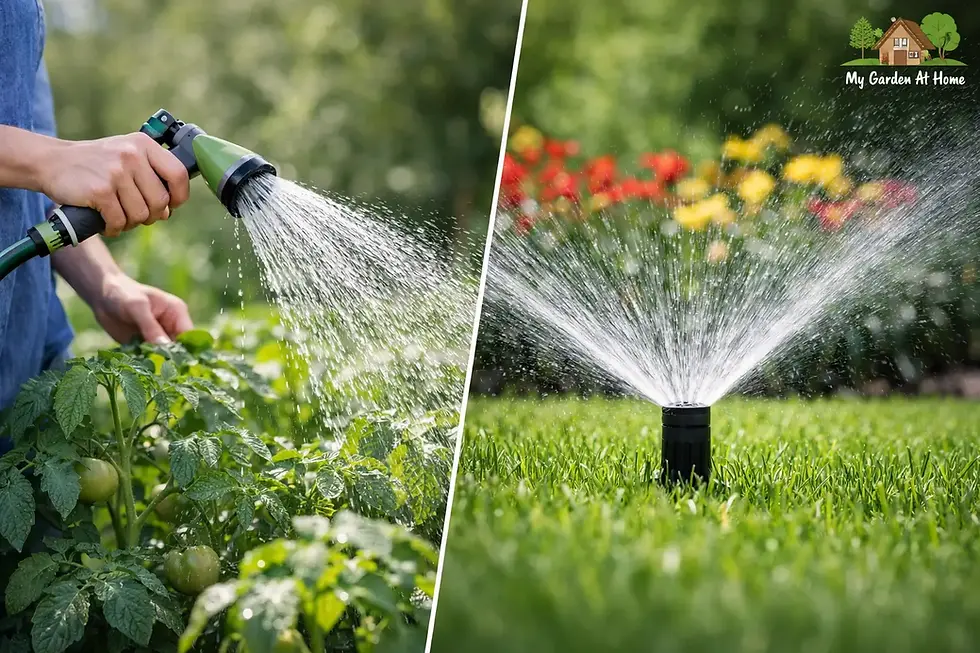
The right answer depends on the size of your outdoor space, the plants you grow, your routine and how consistent you need the result to be. A watering can and hose offer close control. An irrigation system offers reliability when work, travel or family life gets in the way. Both can be useful, and many well-managed gardens use a combination of the two.
Manual Watering vs Irrigation: Which Fits? The Key Difference
Manual watering means using a watering can, hose, spray gun or hand-held lance. You decide when to water, where to aim and how long each plant receives water. This approach suits small gardens, balconies, new planting and containers, where individual plants may have very different needs.
Manual Watering vs Irrigation: Which Fits? Irrigation delivers water through a planned system. Depending on the garden, this may be a simple timer connected to a hose, drip lines beneath hedges and borders, or pop-up sprinklers for lawns. The system can run at set times, often early in the morning, with far less day-to-day input from the homeowner.
The main distinction is consistency. Manual watering relies on you being available and remembering to do it. Irrigation creates a repeatable routine, which can make a major difference during dry weather or when a property is empty for a period.
When Manual Watering Is the Better Choice
Manual watering is often the most sensible option for compact outdoor spaces. A Brussels town garden, a Waterloo terrace with planters, or a balcony full of herbs does not always need the cost or complexity of a fixed system. A good hose attachment or watering can can be enough when the area is small and easy to reach.
It also gives you a valuable chance to inspect the garden. While watering by hand, you may notice aphids on a rose, a pot that is drying out unusually fast, yellowing leaves, damaged stems or early signs of disease. That attention is particularly helpful for newly planted shrubs, young trees, vegetables and seasonal flowers. These plants often need adjustments that an automatic programme cannot make by itself.
Manual watering can be more targeted too. You can soak the root zone of a thirsty hydrangea while leaving drought-tolerant lavender alone. You can avoid wetting foliage late in the day, which can encourage fungal problems on some plants. For gardeners who enjoy being outside and have a flexible schedule, it remains a practical and satisfying method.
The downside is time. Watering a few pots takes minutes; watering a lawn, mature borders, hedges and containers properly can take much longer than expected. It is also easy to water too lightly. A quick daily sprinkle encourages shallow roots, while a slower, deeper soak is usually better for established plants. In busy households, manual watering can become irregular just when the garden needs it most.
When an Irrigation System Makes Sense
Irrigation is a strong investment where watering is extensive, repetitive or difficult to keep up with. Larger gardens in Tervuren and Leuven, properties with long hedges, newly landscaped borders, vegetable gardens and lawns all benefit from regular delivery of water at root level.
Drip irrigation is especially useful for beds, hedges, pots and vegetable plots. It applies water gradually to the soil rather than spraying it through the air, reducing evaporation and keeping leaves drier. This is often a more efficient choice for mixed planting schemes, particularly where borders are densely planted or access is awkward.
Sprinklers can suit lawns, but they need proper planning. A poorly positioned sprinkler may soak a path, wall or patio while leaving part of the lawn dry. The timing matters as well. Early morning watering is normally preferable because less water is lost to heat, and grass has time to dry during the day.
A timer is one of the greatest benefits. It means the garden can be watered during a holiday, a demanding work week or a period when a property is vacant. For diplomatic residences, rental properties and homes where presentation matters, this consistency can prevent a dry spell from turning into weeks of recovery work.
Irrigation does require an initial budget and occasional maintenance. Lines can be damaged during digging, filters may need cleaning, and timers need seasonal checks. A system should also be adjusted as plants mature. What works for a new border in spring may be excessive once shrubs have established strong roots.
Avoid treating irrigation as set-and-forget
Automatic watering is helpful, not magical. Rainfall, heat, wind, soil type and plant growth all change how much water a garden needs. A wet week does not require the same schedule as a hot, windy week in July.
A well-designed system should be easy to alter, and it should be reviewed through the season. Rain sensors, moisture-aware controls and separate zones for lawn, pots and borders can prevent unnecessary watering. The goal is not to run the system as often as possible. It is to provide the right amount of water with minimal waste.
Cost, Water Use and Long-Term Value
Manual watering has the lowest starting cost. Most homes already have access to a tap, and a quality hose, reel and spray head are relatively straightforward purchases. The ongoing cost is your time and the water used.
Irrigation costs more at the beginning because it involves planning, components and installation. The price varies with the number of zones, access to a water supply, lawn coverage, planting areas and whether a timer or more advanced controls are required. However, a system can save time every week and can use water more efficiently than hand watering when it is correctly designed.
Water efficiency depends less on the method alone and more on how it is used. A hose left running beside a border can waste significant water. Equally, a sprinkler programmed to run during rainfall is no better. Drip lines, mulching, watering early in the day and grouping plants with similar needs are practical ways to reduce consumption regardless of the setup.
For lawns, remember that a slightly less lush appearance during a dry period is not always a problem. Established grass can slow down and recover when rain returns. Prioritise newly planted areas, pots, vegetable beds and vulnerable shrubs before trying to keep every square metre of lawn bright green.
A Hybrid Approach Often Works Best
For many households, the best decision is not manual watering or irrigation alone. A simple automated system can handle the regular workload, while manual watering covers the exceptions.
For example, drip irrigation can keep hedge roots, borders and vegetable beds supplied during dry weather. You can then water newly planted containers by hand, give a struggling plant extra attention, and adjust for areas that receive more sun or wind. This combination gives you reliability without losing the judgement that a garden needs.
It is also a sensible way to phase an investment. Start with the areas that are hardest to water or most expensive to replace, such as a new hedge, large planting bed or vegetable garden. Additional zones can be added later if they prove useful.
Choosing the Right Setup for Your Garden
Think first about the amount of time you can genuinely give to watering in summer. If you enjoy the routine and only have a modest area to manage, manual watering may be entirely sufficient. If watering feels like a recurring pressure, or you are regularly away from home, irrigation is likely to offer better value and peace of mind.
Also consider the garden itself. Containers dry quickly and often need individual attention. Lawns need even coverage. Hedges and borders respond well to slower root-zone watering. A professional assessment can identify where irrigation will make the most difference, without installing equipment where it is unnecessary.
My Garden At Home can help homeowners assess watering needs as part of wider garden care, landscaping or lawn recovery work. A tidy, healthy garden is easier to maintain when the watering method matches the space rather than forcing one solution everywhere.
The most useful watering plan is the one you can maintain through the hottest and busiest weeks, not just the one that looks simplest on the first day.
Contact My Garden At Home
• WhatsApp: +32 466 900 281 • Email: info@gardenathome.be • Phone: +32 2 808 70 31 • Website: mygardenathome.be


