


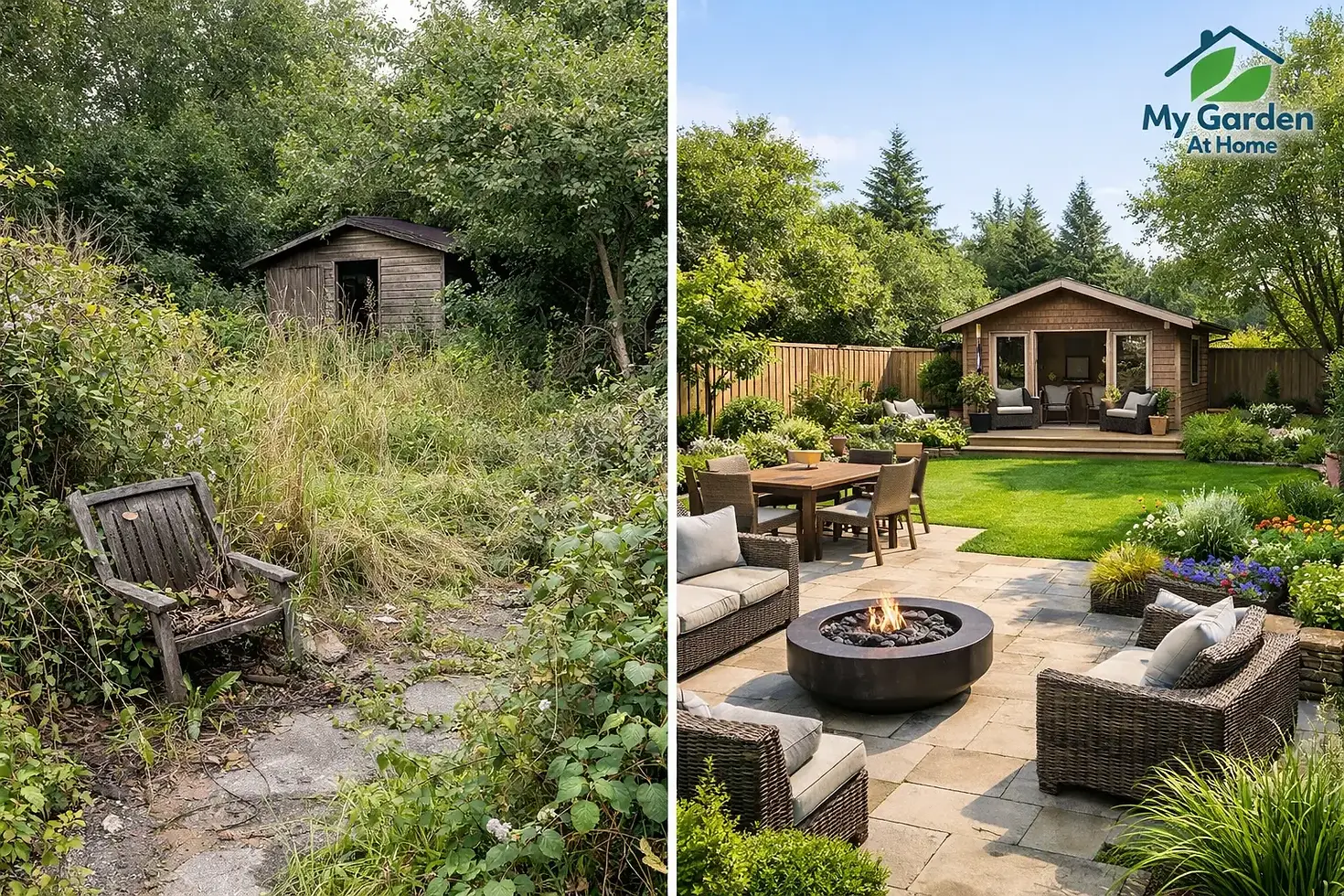
Overgrown Family Garden Transformation Example
- Garden At Home
- 10 minutes ago
- 5 min read
A garden can become difficult surprisingly quickly. In this overgrown family garden transformation example, a busy household in Waterloo had gradually lost use of much of its outdoor space. What began as a few missed mowing dates and unchecked hedge growth had become a dense, untidy garden where children could not play comfortably and outdoor meals felt out of reach.
The owners did not need a grand redesign. They needed a practical reset: clear access, a lawn that could recover, safer boundaries and a realistic plan for keeping everything presentable afterwards. That difference matters. A clean-up should make a garden easier to live with, not create a high-maintenance result that becomes overwhelming again within a season.
Before: A Family Garden That Had Stopped Working
The property had a good-sized lawn, mature hedges, established shrubs and a terrace close to the house. On paper, it had all the ingredients of a useful family garden. In reality, the lawn was long and patchy, weeds had spread through the borders, and several shrubs were pushing into the main paths.
The hedge along the boundary had grown unevenly, making the garden look smaller and blocking light from part of the lawn. Fallen branches, old plant pots and green waste had collected behind the shed. There was also a common concern after a period of fast growth: nobody was quite sure what was hidden beneath the vegetation or whether the paving edges were still safe to walk on.
For families, this is often the point where a garden feels like another job waiting at the weekend. Between work, school runs and travel, clearing it one hour at a time rarely gets ahead of the growth. A professional garden clean-up gives the work a clear order, with the most useful areas recovered first.
The First Visit: Seeing What Could Be Saved
A proper assessment does not start with cutting everything back. Mature gardens often have plants worth retaining, even when they are tangled or oversized. The aim was to identify healthy shrubs, check which branches could be pruned safely, locate the lawn edges and separate reusable garden features from genuine waste.
The clients' priorities were simple. They wanted a clear route from the terrace to the shed, space for children to run on the lawn, a neater hedge for privacy, and borders that did not look abandoned. They also wanted communication in English and a clear outline of the work before the team arrived, which is particularly helpful for international households managing a property in Belgium.
The Overgrown Family Garden Transformation Example: The Work
The clean-up was planned in stages so that the garden became safer and more open early in the job. First, the team cleared the paths, terrace edges and access to the shed. This immediately changed how the garden felt: the usable shape of the space was visible again.
Next came the heavy growth. Long grass was cut back carefully rather than scalped in one pass. If a neglected lawn is cut too short, especially during dry weather, it can struggle to recover and may expose bare areas. The first cut therefore focused on reducing height, collecting the clippings and allowing the grass to breathe before the next stage of lawn care.
Overgrown shrubs were pruned to remove dead, crossing and obstructive growth. This was not a case of making every plant identical. Some shrubs benefit from a firm reduction, while others need a lighter approach depending on their species, flowering period and condition. Cutting at the wrong time can reduce next season's flowers, so a tidy result should still respect the garden's planting.
The boundary hedge was trimmed back into a cleaner line, with attention given to the garden side and the visible roadside edge. Regular hedge trimming after a major reduction is usually far easier and kinder to the hedge than allowing it to become too large again.
Once the main vegetation had been dealt with, the borders could be weeded and cleared of accumulated debris. The team removed unwanted self-seeded growth, collected green waste and uncovered the original border lines. No expensive planting scheme was needed to make the space look cared for. Clean edges, visible soil and well-spaced existing shrubs created a much calmer result.
Lawn Recovery Was Not Instant - But It Was Possible
The lawn was the part of the garden the family noticed most. After the initial cut, it looked thinner than expected in places. That is normal. Long grass can hide moss, compacted soil and bare patches, particularly after a wet Belgian winter.
The recovery plan included a follow-up mow at the right height, edging, removal of remaining debris and advice on watering according to weather conditions. In some gardens, scarifying, aeration or overseeding would be the sensible next step. It depends on the condition of the soil, how much shade the lawn receives and whether there is enough time before very hot or frosty weather.
For this garden, steady maintenance made more sense than trying to force a perfect lawn in one visit. Within a few weeks, regular mowing and better light around the hedge helped the grass look more even. The family had a lawn they could use again, rather than an unrealistic promise of instant perfection.
After: A Garden Ready for Everyday Life
The transformation was most visible from the back door. Instead of looking onto a wall of uncut grass and sprawling shrubs, the family could see the terrace, lawn and boundaries as separate, useful areas. The route to the shed was clear, the hedge looked intentional rather than unruly, and the garden felt larger because its edges were visible again.
The result was not a showroom garden, and it did not need to be. It was a working outdoor space for a family: tidy enough for guests, safe enough for everyday use and manageable enough to maintain. That is often the best outcome after an overgrown garden clean-up.
The clients chose ongoing visits to prevent the same problem returning. Frequency can vary. A small terrace garden may only need seasonal attention, while a larger family garden with lawns and hedges may benefit from regular visits during the growing season. One-off work is ideal for a reset; a maintenance plan protects that investment.
When Should You Arrange an Overgrown Garden Clean-Up?
The best time is usually before the garden becomes unusable, but there is no need to wait for a perfect season. Spring is popular because growth returns quickly and families want their outdoor space ready for warmer days. Autumn clean-ups are equally valuable for clearing leaves, reducing disease risk and preparing lawns and borders for winter.
If your garden has blocked paths, a hedge affecting light or access, grass too long to mow normally, or borders you no longer recognise, it is time to ask for help. Taking photographs and sending them by WhatsApp is often the quickest way to begin a quotation. Include the main priorities, such as lawn recovery, hedge trimming, pruning, waste removal or a full garden tidy-up, so the work can be planned properly.
A recovered garden gives you more than a neater view from the window. It gives your household a place to step outside, slow down and use the space you already have.
Contact My Garden At Home
• WhatsApp: +32 466 900 281 • Email: info@gardenathome.be • Phone: +32 2 808 70 31 • Website: mygardenathome.be


