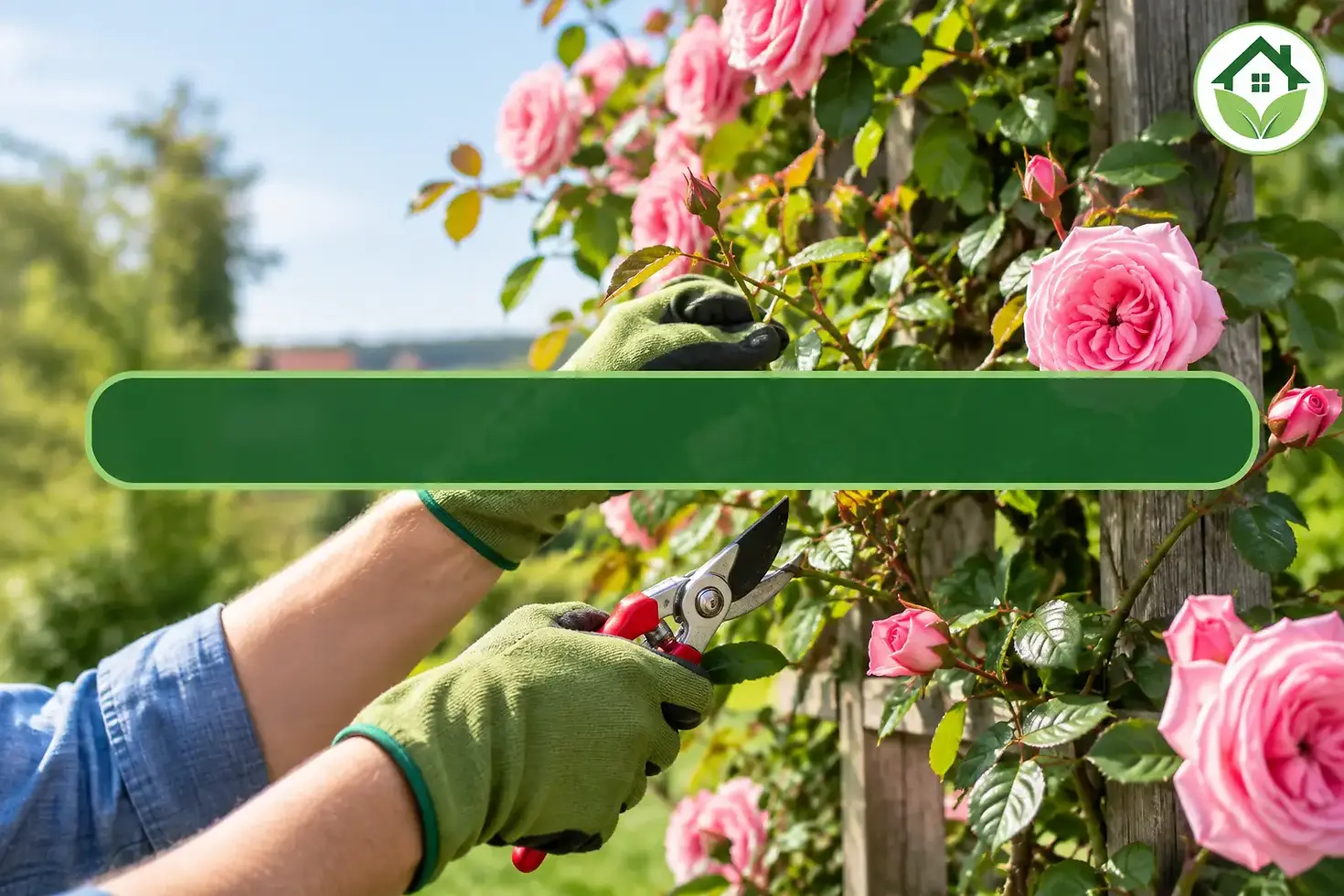
When to Prune Climbing Roses for More Flowers
A climbing rose can look disappointing after winter: long bare stems, a tangle of old wood and flowers appearing only at the very top of the wall. The usual cause is not poor soil or the Belgian weather. It is often that the rose has not been trained and cut back in the right way. When you prune climbing roses correctly, you encourage fresh flowering side shoots across the whole plant, rather than a few blooms out of reach.
For busy homeowners, this is one of those jobs where a little knowledge prevents years of frustration. Climbing roses are generous plants, but they need a clear framework and regular attention. The aim is not to make them small. It is to guide their strongest stems where you want them, remove unproductive growth and make room for next season’s flowers.
When to prune climbing roses
Most repeat-flowering climbing roses are pruned from late winter into early spring, usually from February to March in Belgium. Choose a dry day when the worst hard frosts have passed but the plant is still largely dormant. Buds will be easier to see, and you can work without cutting away new soft growth.
This timing suits many popular garden climbers, including repeat-flowering roses trained on house walls, fences, arches and trellis. They flower mainly on short side shoots produced from their main framework stems. Pruning those side shoots in late winter helps the plant put its energy into strong new flowering growth.
There is one important exception. Once-flowering rambling roses should be pruned shortly after they flower in summer, not in spring. They generally bloom on wood made the previous year. A hard late-winter prune can remove the stems that would have carried that year’s display. Before cutting, check the plant label if you have it, or think back: does it flower once in a large early-summer flush, or does it repeat through summer and into autumn?
If the variety is unknown, avoid drastic work at first. Remove dead, damaged and clearly overcrowded stems, then wait to see how it flowers. A professional gardener can also identify the likely growth habit from the stems and flowering pattern.
How to prune climbing roses step by step
Start with clean, sharp secateurs, sturdy gloves and long sleeves. Rose thorns catch easily, particularly on mature plants against a wall. For thick, old canes, loppers are safer than forcing ordinary secateurs through woody stems.
First, remove dead, diseased or damaged wood. Dead stems are usually dark, dry and brittle inside. Cut back until the centre of the stem looks healthy and pale. Also remove weak, crossing shoots that rub against each other, as these reduce airflow and can create wounds where disease takes hold.
Next, look for the main structural stems. These are the thick, long canes that form the permanent shape of the rose. Keep the healthiest ones and tie them securely to their support. Do not tie tightly. Leave enough room for the stem to thicken during the growing season, using soft garden ties rather than wire or string that can cut into the bark.
The key detail is direction. Train main canes as horizontally as the support allows, or in a wide fan shape. A vertical cane naturally sends most of its energy to the top. A cane trained sideways produces more side shoots along its length, which means more flowers from lower down to higher up.
Once the framework is tied in, shorten the side shoots growing from those main canes. For an established repeat-flowering climber, cut these laterals back to two or three buds from their base. Make the cut just above an outward-facing bud where possible. This keeps growth open rather than directing it towards the wall or into the middle of the plant.
Finally, stand back. A well-pruned climbing rose should still have a clear framework, not a collection of short stumps. You should be able to see where new shoots will grow and where each main cane is heading. Remove fallen leaves and old prunings from the base, particularly if the rose had black spot the previous season.
Do not cut every long stem back hard
This is the mistake we see most often in overgrown gardens. Long stems are cut down indiscriminately because they look untidy, leaving a climber with little structure and fewer flowers. Instead, retain healthy young long canes. These are valuable replacements for older, less productive stems.
Each year, it is sensible to remove one or two of the oldest main stems at ground level if the plant has suitable younger growth ready to take over. This gradual renewal keeps the rose vigorous without leaving a bare wall. If there are no young replacement canes, keep the old framework for another year and concentrate on training new shoots as they emerge.
A Leuven garden before and after pruning
In a recent Leuven garden tidy-up, a mature climbing rose had spread across a brick wall and into a neighbouring shrub. The owner had avoided cutting it for several seasons because it was flowering, but the flowers had moved almost entirely to the top. At ground level, the stems were crowded, thorny and bare.
The first stage was careful rather than severe. We removed dead wood, cut out several rubbing stems and freed the rose from the shrub without stripping away its healthy framework. Two younger canes were tied into a broad fan across the wall, while the old side shoots were shortened back to a few buds.
The immediate after-effect was a tidier wall and clear access around the planting bed. The more valuable result comes later: the newly trained canes can produce flowering shoots along their full length, while improved air movement makes the plant easier to monitor and feed. It is a good example of why climbing roses respond better to thoughtful shaping than a quick hard cut.
What to do with neglected climbing roses
A rose that has been ignored for years can be restored, but it may take two or three seasons. Trying to fix everything in one afternoon can leave it weak, especially if it is old or growing in poor soil.
Begin by taking out dead material and no more than one or two of the oldest unproductive stems. Keep the strongest younger canes and tie them where they can create a useful new framework. Shorten side shoots as normal, but avoid removing more than around one-third of the living plant in a single season unless there is a clear disease or safety issue.
After pruning, clear weeds from the base and add a generous layer of well-rotted manure or garden compost, keeping it away from the stems themselves. Roses appreciate moisture-retentive soil, but not constant waterlogging. In a dry spring, water deeply at the base rather than sprinkling the leaves. A rose growing against a house wall can be particularly dry because the wall shelters the soil from rain.
Small details that make a visible difference
Deadhead repeat-flowering climbers through the season by cutting spent blooms back to the first strong leaf. This will not turn every variety into a continuous bloomer, but it often encourages a better second display. Check ties at the same time. Fast-growing shoots can become loose in wind or become constricted as stems thicken.
Give roses enough space from dense hedges and overhanging shrubs. They need light and airflow, and they should not have to compete heavily for water. If a climber is planted very close to a wall, direct water and feed slightly away from the stem so it reaches the main root zone.
For a rose on a high wall, large arch or difficult boundary, safe access matters as much as pruning knowledge. Working from unstable ladders around thorny stems is not worth the risk. A planned visit can combine rose pruning with hedge trimming, weeding and a general seasonal tidy-up, leaving the whole garden ready for the months ahead.
If your climbing rose has become a thorny puzzle, My Garden At Home can assess the plant, prune it with its flowering habit in mind and leave the area neat afterwards. Send us a photo by WhatsApp for a quick quotation and practical advice for your garden.
Contact My Garden At Home
• WhatsApp: +32 466 900 281 • Email: info@gardenathome.be • Phone: +32 2 808 70 31 • Website: mygardenathome.be