A Guide to Small Garden Landscaping in Belgium
A small garden should not feel like a compromise. With the right layout, it can become a calm breakfast spot, a secure play area, a green view from the kitchen, or a tidy outdoor room that is easy to enjoy after work. This guide to small garden landscaping focuses on the practical decisions that make the biggest difference in Belgian homes, from improving privacy to choosing plants that will not demand every weekend.

The aim is not to fill every spare corner. It is to give each part of the garden a purpose, create a sense of space, and make maintenance realistic for the way you live.
Start with how you want to use the space
Before choosing paving, pots or plants, decide what the garden needs to do. A narrow city garden and a compact terrace can rarely do everything at once. Trying to fit in a lawn, dining table, shed, children’s play equipment, large borders and several seating areas usually makes the space feel crowded.
Choose one main use, then support it with smaller features. If you entertain regularly, prioritise a level seating area close to the house. If you want a greener outlook from a flat or home office, focus on layered planting and a simple place to sit. For families, a clear open area may be more useful than intricate borders that are quickly damaged by play.
It also helps to look at the garden from indoors. In Brussels and the surrounding area, many smaller gardens are viewed as much through patio doors and windows as they are used outside. A well-placed evergreen shrub, small tree or raised planter can make that view feel finished throughout the year.
Make a small garden look wider and longer
Straight lines are useful when they serve the space, but a long central path or a fence line repeated from one end to the other can draw attention to how narrow a garden is. Instead, create a reason for the eye to travel.
A paved area near the house can lead to a planted border, then a feature at the far end such as a bench, specimen shrub or compact tree. Slightly offset paths, curved bed edges and changes in texture make the garden feel less like one short rectangle. This does not require complicated construction. It is about giving the space depth.
Keep the largest open surface clear. One generous patio often works better than several small, disconnected hardstanding areas. Where drainage allows, use a limited palette of paving materials so the garden feels coherent rather than busy. Light-coloured paving can brighten a shaded garden, but it may show moss and dirt more quickly. Darker finishes can feel smart and grounded, although they can make a heavily shaded space appear smaller.
Use height without creating clutter
Vertical planting is one of the most effective tools in a small garden. Trellis, climbing plants and wall-mounted planters add greenery while preserving floor space. They can also soften boundary fencing and improve privacy from neighbouring properties.
The trade-off is maintenance. Fast-growing climbers can look excellent, but they need tying in, pruning and occasional checks around gutters, fences and neighbouring boundaries. For a lower-maintenance result, combine a few well-supported climbers with evergreen planting in containers or narrow borders.
Avoid placing tall plants everywhere. Use them selectively, perhaps at the rear of the garden or beside a seating area where they create screening. Leaving some lower planting in the foreground keeps sightlines open and makes the garden feel more generous.
A guide to small garden landscaping with planting that lasts
In a compact space, every plant is noticeable. Choose plants for their shape and reliability, not only for the colour they show for two weeks in spring. A mix of evergreen structure, seasonal flowers and varied leaf texture gives a small garden interest across the year.
For many Belgian gardens, shade and damp soil are as important as sun exposure. A plant that thrives in a bright, sheltered nursery display may struggle against a north-facing wall or in heavy, wet ground. Check where sunlight falls in the morning and late afternoon before planting. This simple observation prevents costly replacements later.
Use repetition. Planting the same variety in small groups, rather than buying one of everything, creates a calmer and more intentional result. A repeated grass, hardy geranium, fern or evergreen shrub can give a border a clear rhythm. Add one or two stronger focal plants rather than several competing statement pieces.
Containers are particularly useful for terraces and paved gardens. They allow you to introduce height, colour and seasonal change without digging into compacted ground. However, pots dry out faster in summer and are exposed to frost in winter. Large, frost-resistant containers with good drainage are usually the better long-term choice.
Do not overlook the lawn
A small lawn can be attractive, but it needs enough light, drainage and access for mowing to be worthwhile. In a deeply shaded garden, a thin and muddy lawn may become a recurring frustration. Replacing part of it with planted ground cover, gravel designed for garden use, or a larger patio can reduce maintenance and improve the appearance.
Where a lawn is important, keep its outline simple. An awkward strip of grass around several beds takes longer to cut than a clean rectangle or gentle curve. Lawn recovery after winter can involve scarifying, overseeding, feeding and dealing with moss, but the best result comes from addressing the cause, whether that is shade, compacted soil or poor drainage.
Privacy, boundaries and practical access
Small gardens are often close to neighbours, especially behind townhouses and newer developments. Privacy matters, but solid screens placed too high can block light and make the garden feel enclosed. A combination of fencing, trellis and planting usually gives a softer result.
Before installing anything, consider access. Can materials be brought through the home, side passage or shared entrance? Is there space for garden waste to be removed without damaging indoor flooring or common areas? These details affect the cost and timing of landscaping work, particularly for properties without rear access.
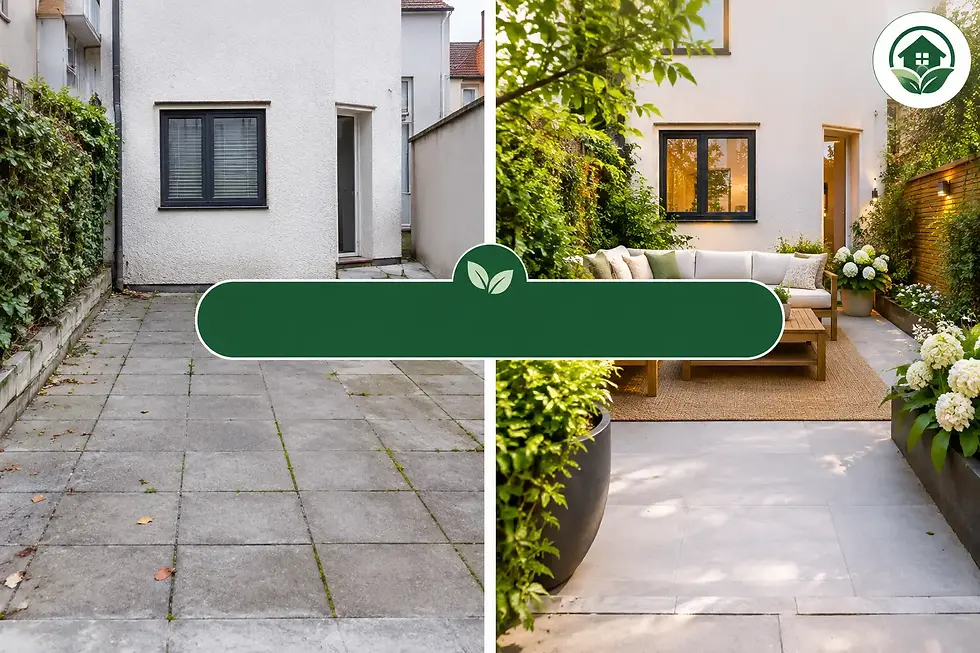
A recent tidy-up in Waterloo showed how much this planning matters. The garden was small but had become difficult to use after several seasons of unchecked hedge growth, weeds and a worn lawn edge. At first, the boundaries made the whole space feel dark and narrow. After clearing the overgrowth, reducing the hedge to a manageable height, reshaping the borders and defining one clear seating area, the garden looked wider immediately. The important change was not adding more features. It was restoring light, order and usable space.
That before-and-after approach is often the best starting point for an overgrown garden. Clear what is no longer working before investing in new planting or surfaces. You may find that the original layout needs only a few changes once the garden is visible again.
Design for the maintenance you can actually manage
A beautifully landscaped garden that requires constant attention can soon become another job on the list. For busy homeowners, landlords and expats, low-maintenance should mean sensible maintenance, not no maintenance at all.
Choose fewer plant varieties, give beds enough room for plants to mature, and avoid delicate features that need frequent cleaning. Mulch can help suppress weeds and retain moisture, although it needs topping up. Hedges provide excellent screening but will need regular trimming if you want crisp lines. Gravel may reduce mowing, but leaves and weeds still need clearing.
Seasonal care keeps a small garden looking under control. Spring is the time for clearing winter debris, pruning suitable plants, lawn repairs and fresh planting. Summer brings watering, mowing and hedge work. Autumn is ideal for leaf clearance and preparing beds, while winter is useful for structural pruning and planning changes before the growing season begins.
If you prefer to enjoy the garden rather than manage every task, a one-off clearance can be followed by regular maintenance visits. This is particularly helpful for rental properties, diplomatic residences and homes that are empty during holidays. Clear scheduling and professional garden care help prevent a small issue from becoming an overgrown problem.
A small garden works best when it reflects your real routine. Keep the layout simple, make room for the view you want to enjoy, and choose planting that gives pleasure without taking over your weekends. If your garden needs a fresh start, a professional assessment can turn a difficult outdoor space into one that feels welcoming again.
Contact My Garden At Home
• WhatsApp: +32 466 900 281
• Email: info@gardenathome.be
• Phone: +32 2 808 70 31
• Website: mygardenathome.be