Before and After Courtyard Landscaping, Brussels
A courtyard can look manageable from an upstairs window, then feel completely different when you stand in it. In this before after courtyard landscaping report, a compact Brussels courtyard had become a catch-all outdoor space: tired paving, dense weeds, overgrown shrubs and a lawn edge that had disappeared beneath self-seeded growth. The owner wanted a garden that looked cared for without turning into another full-time responsibility.
This was not a case of adding as many new features as possible. The best result came from clearing what was no longer working, protecting the plants worth keeping and setting the space up for realistic maintenance.
The before: a courtyard that had lost its purpose
The courtyard belonged to a busy household with limited time for gardening. It had been left largely untouched through a wet autumn and winter, apart from occasional attempts to cut back the most visible growth. By spring, the space felt smaller than it was.
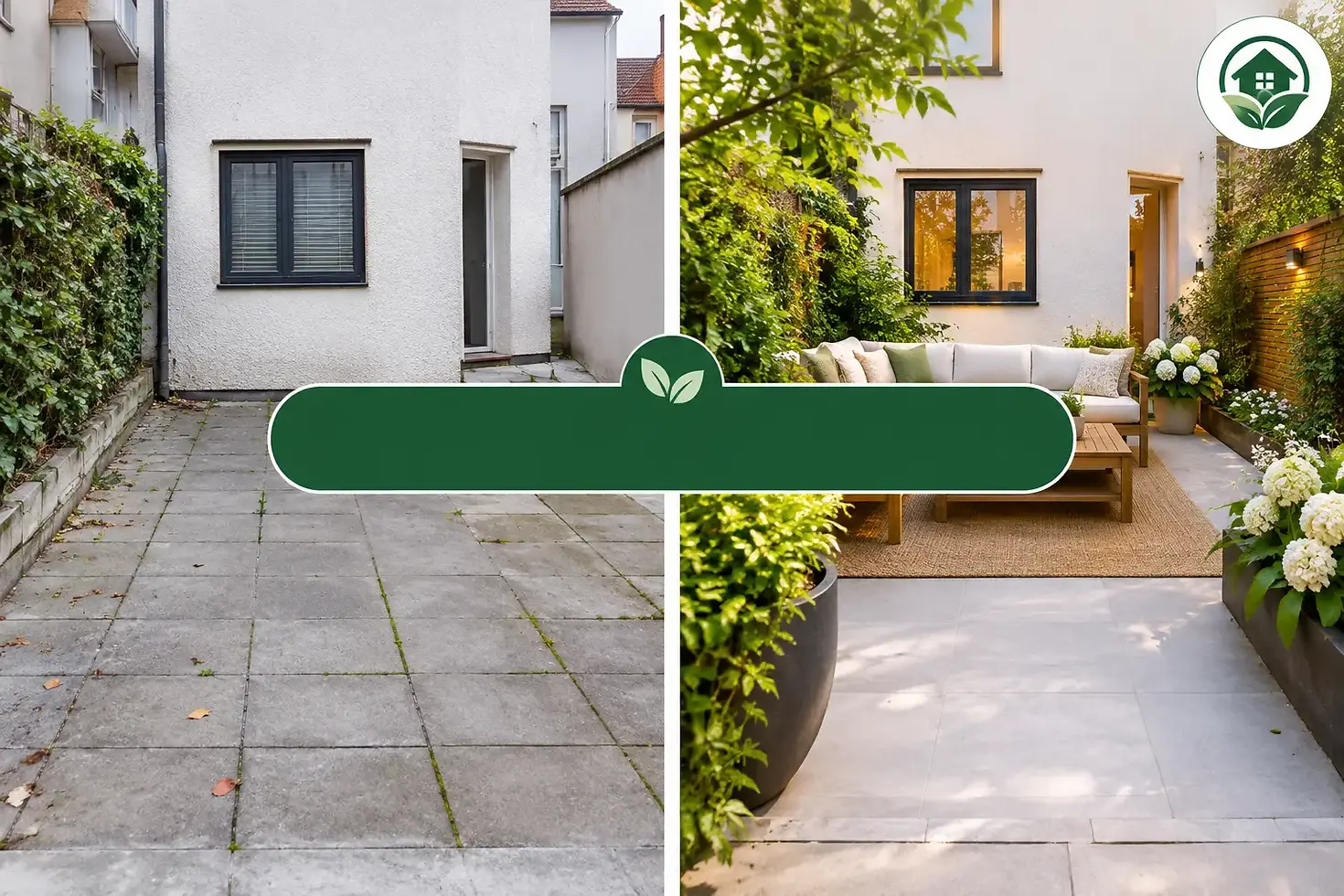
Weeds had pushed through paving joints and along the boundary walls. A climbing plant had spread across a fence and into neighbouring growth. Two shrubs were healthy but badly misshapen, blocking light from the seating area. Fallen leaves and compacted debris were holding moisture in corners, while a narrow lawn strip looked patchy rather than green.
For many courtyard owners, this is the moment when the job starts to feel overwhelming. A few hours of casual tidying may improve the view, but it rarely deals with the causes: built-up organic matter, unchecked growth, poor lawn edges and plants competing for space.
There was also a practical issue. The courtyard was accessed through the house, so every stage had to be organised carefully. Outdoor work in a city property is often less about the size of the garden and more about working cleanly, protecting internal routes and leaving no bags, cuttings or soil behind.
Planning the after before cutting anything back
A good courtyard clean-up begins with decisions, not just tools. We walked through the garden with the owner and agreed on three priorities: reclaim the patio for sitting outside, make the boundaries look neat and reduce the amount of routine work needed later.
That meant keeping the established shrubs, but pruning them selectively rather than cutting them down hard. A severe cut can sometimes be appropriate, particularly for a plant that has become too large, but it can also leave a courtyard exposed and bare for months. In this case, careful thinning gave the plants shape while allowing more light and air through.
We also identified what should not be removed. A small evergreen near the rear wall provided year-round structure, and a mature climbing plant had good coverage in one section of the fence. The problem was not the plants themselves. It was the lack of defined boundaries and regular attention.
For homeowners and expats who have recently moved into a property, this assessment matters. It is easy to assume an untidy courtyard needs a complete redesign. Sometimes it does. More often, a professional clear-out and sensible pruning reveal a garden with strong foundations.
Before and after courtyard landscaping: the work completed
The first stage was a full garden clearance. We removed accumulated leaves, dead stems, unwanted self-seeded plants and green waste from around the patio, borders and lawn edge. Once the surface was clear, the courtyard immediately looked larger.
Next came detailed weeding. This was more than pulling visible weeds from the top of the soil. We addressed growth in planting beds, between paving joints and around the base of shrubs, where roots and debris had collected. Courtyards tend to create sheltered, damp spots, especially beside walls and behind planters, so these areas need particular attention.
The shrubs were then pruned to restore proportion. Crossing branches and weak internal growth were removed, while healthy outward-facing stems were retained. The climbing plant was tied back and reduced where it had spread beyond its intended section. The aim was a natural, tidy appearance, not an overly formal finish.
The lawn strip needed a different approach. It was edged cleanly, raked to remove surface debris and cut at an appropriate height. Where grass is thin because it receives limited light, mowing it very short can make the problem worse. A slightly higher cut often produces a better-looking result while the lawn recovers.
Finally, the patio and visible hard surfaces were swept thoroughly. The owner did not ask for a major hard-landscaping installation, and one was not necessary. A clean paved area, crisp edges and controlled planting made the existing courtyard feel intentional again.
The after: a usable space, not a showroom garden
By the end of the visit, the patio was clear enough for a small table and chairs. The fence line looked contained, the shrubs had shape and the lawn no longer appeared to be an afterthought. Most importantly, the courtyard could be used immediately.
The transformation was noticeable because every visible area had a purpose. There was a clear route through the garden, planting beds had definition and the boundaries no longer felt crowded. It looked cared for, but it did not look artificially stripped or overdesigned.
That distinction matters. A courtyard should suit the people who live with it. A family may need clear floor space and durable planting. A flat owner may want an attractive outlook with minimal upkeep. A landlord or diplomatic property manager may need a dependable standard between tenancies or visits. The right after photo is not always the one with the most expensive additions. It is the one where the outdoor space is easy to enjoy and easy to maintain.
What keeps a courtyard looking good afterwards?
A one-off transformation can make a dramatic difference, but regular care protects the result. In a small enclosed garden, growth is very visible. A hedge or climber can quickly cover a window, weeds can seed between paving, and leaves gather in corners where wind cannot carry them away.
The ideal visit frequency depends on the planting and the level of finish you expect. Some courtyards need a seasonal clear-up and pruning visit. Others benefit from regular maintenance during the growing season, particularly where a tidy presentation is important for a home office, rental property or entertaining space.
A realistic ongoing plan often includes weeding, lawn care where applicable, hedge trimming, pruning, leaf clearance and a check for plants that are becoming too large for their position. It is usually more economical to keep on top of these tasks than to wait until a major clearance is needed again.
If drainage, damaged paving or very deep shade is affecting the garden, maintenance alone may not solve everything. These are the occasions when a more tailored landscaping plan can be worthwhile. But a proper clean-up is still the best first step because it shows what the space genuinely needs.
A practical start for Brussels courtyard owners
If your courtyard has become overgrown after winter, a move, building work or a busy period at home, do not feel you need to have every decision made before asking for help. Clear photographs and a short message are often enough to start the conversation and arrange a fast quotation.
My Garden At Home provides insured, practical garden care for homes and properties in Brussels and nearby areas. Our teams can work with you in English, French, Flemish, German, Spanish and other languages, with clear communication from the first visit through to ongoing maintenance.
A well-kept courtyard does not need to be complicated. It needs a clear plan, careful hands and enough regular attention to let the space stay useful rather than slowly disappearing under growth. Send My Garden At Home a message to discuss your courtyard clean-up, pruning or regular garden care.
Contact My Garden At Home
• WhatsApp: +32 466 900 281 • Email: info@gardenathome.be • Phone: +32 2 808 70 31 • Website: mygardenathome.be