Garden Fertilising Service Belgium for Better Lawns
- Garden At Home
- 2 days ago
- 5 min read
A tired lawn can make an otherwise well-kept property look neglected. On a recent Tervuren garden visit, the issue was clear from the gate: pale grass, thin patches beneath mature trees, and border plants that had stopped producing strong new growth. The owner did not need more products from a garden centre. They needed a garden fertilising service in Belgium that looked at the whole garden, not just the surface symptoms.
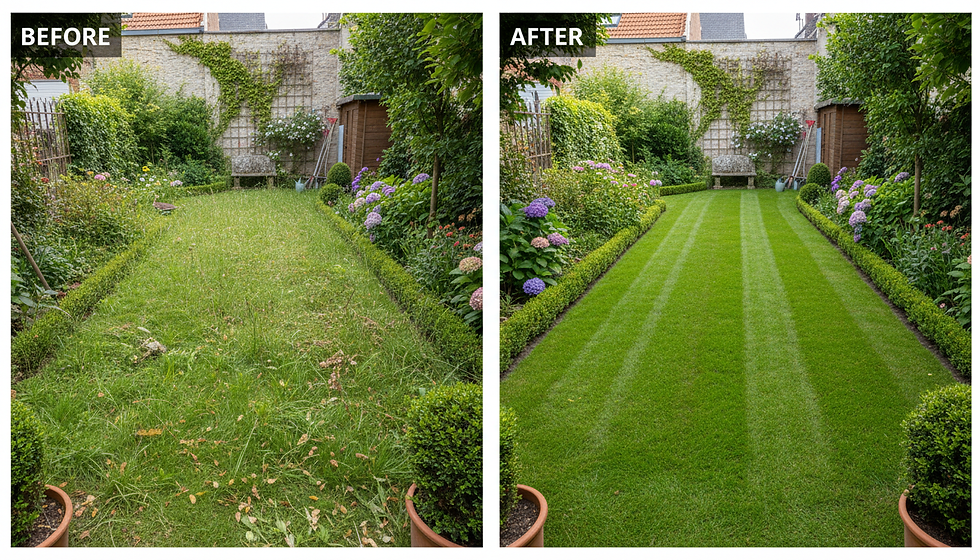
The work started with a practical assessment of the lawn, borders, hedge line and soil conditions. After targeted feeding, lawn care and a tidy-up of competing weeds, the garden began to change. The grass regained colour and density over the following weeks, while the borders responded with healthier foliage and more even growth. This is what professional fertilising is for: giving plants the right support at the point when they can use it.
Why gardens in Belgium often need more than a quick feed
Belgian gardens face a demanding mix of conditions. Long wet spells can wash nutrients deeper into the soil. Compact ground, especially in established residential gardens, can prevent roots from taking up what is already there. Shade from trees, walls and neighbouring properties creates further variation, even within a small garden.
A bag of general fertiliser may help temporarily, but it can also be the wrong answer. Too much nitrogen can force soft, rapid lawn growth that needs constant mowing. Applied at the wrong time, it may be wasted by heavy rain or encourage weak growth before a cold period. A good result depends on the type of lawn, the condition of the soil, the plants involved and the season.
For busy homeowners, landlords and diplomatic properties, this is often the difference between a garden that is merely maintained and one that looks properly cared for. Feeding should fit into the wider maintenance plan, alongside mowing, pruning, weeding and seasonal clean-ups.
Garden Fertilising Service Belgium for Better Lawns - A Tervuren before-and-after garden report
Garden Fertilising Service Belgium for Better Lawns - This particular garden had been receiving occasional mowing, but no consistent lawn treatment for some time. The owner had noticed that the lawn looked greener after rain but faded quickly afterwards. There were also broadleaf weeds in several areas and a visibly weaker strip along the hedge, where roots competed for moisture and nutrients.
Before applying any feed, our team cleared loose debris and assessed the lawn’s condition. Feeding a lawn covered with leaves, weeds or heavy thatch is rarely effective. The product may not reach the soil evenly, and the underlying problem remains hidden. We also considered the shaded areas separately from the sunnier central lawn rather than treating every square metre as identical.
The selected fertiliser was applied at an appropriate rate for the season and the lawn’s condition. The borders received suitable nutrition too, with care taken not to treat every plant in the same way. A mature hedge, a flowering shrub and a hungry perennial bed all have different requirements.
The visible after-result was not instant, and that is a good sign. Healthy fertilising is not about a sudden artificial green. In the weeks that followed, the lawn filled in more evenly, the grass colour improved and the weaker hedge-side area began to catch up. The owner also had a clearer maintenance routine: regular mowing at the right height, watering only when needed, and a follow-up visit planned around seasonal growth.
What a professional fertilising visit should include
A proper visit begins with observation. We look for yellowing, sparse turf, moss, weeds, compacted areas, poor drainage and signs that a plant may be struggling for a reason other than low nutrients. Fertiliser cannot correct every problem. If a lawn is waterlogged, badly shaded or severely compacted, feeding alone will not produce the result you want.
This is why the best approach is often combined. A lawn may need scarifying, aeration, overseeding or weed control as well as feeding. Borders may benefit from weeding and pruning first, so the plants you want to keep are not competing with unwanted growth. Where soil is exhausted or planting is crowded, improving the structure and adjusting the planting plan can matter more than adding another feed.
For terraces and smaller gardens, the principle is the same but the method changes. Pots and planters lose nutrients faster than open ground, especially when they are watered frequently. They benefit from careful, measured feeding rather than a blanket lawn treatment. A small space can look remarkably better when its containers, climbers and evergreen planting are given the right seasonal attention.
The right timing makes a difference
Spring is a popular time to feed lawns and borders because plants are beginning active growth. However, autumn can be equally valuable, particularly for helping lawns recover from summer use and preparing roots for the cooler months. The exact timing depends on weather, soil temperature and what has already been done in the garden.
During dry weather, fertiliser needs sensible aftercare. Some products require watering in, while others are best applied when rain is expected but not when a downpour is imminent. During very wet periods, rushing the job can be counterproductive. A professional team will schedule the work around conditions rather than applying products simply because the calendar says it is time.
Garden fertilising service Belgium property owners can rely on
For many clients, the main benefit is not having to guess. You do not need to work out which feed suits a shaded lawn, whether your roses need attention, or why a hedge is thinning on one side. You receive a practical recommendation based on what is actually growing in your garden and what condition it is in.
This is particularly useful after a house move, a long holiday, building work or a period when garden care has slipped behind. Newly occupied properties often reveal problems only once spring growth starts. An overgrown or nutrient-poor garden can feel like a large task, but it becomes manageable when work is prioritised: clear the area, restore the lawn and borders, then set up regular care where it makes sense.
For a one-off improvement, fertilising can form part of a seasonal reset. For gardens that need to look presentable throughout the year, recurring maintenance is usually the better value. Regular visits allow small issues to be dealt with before they become costly recovery work. They also give lawns, hedges and planting a more consistent appearance from season to season.
Clear, practical care for your outdoor space
Whether your garden is a compact city plot, a family lawn in Tervuren or a landscaped property near Waterloo or Leuven, the aim is straightforward: healthier growth, tidier presentation and less work for you. Insured, experienced teams can handle the feeding alongside the maintenance tasks that make it effective, with clear communication in English and other languages.
If your lawn has lost its colour, your borders look tired or you are unsure what your garden needs next, send photos and a short description of the area by WhatsApp. A timely assessment can turn a disappointing patch of ground into a garden you are pleased to come home to.
Contact My Garden At Home
• WhatsApp: +32 466 900 281
• Email: info@gardenathome.be
• Phone: +32 2 808 70 31
• Website: mygardenathome.be