


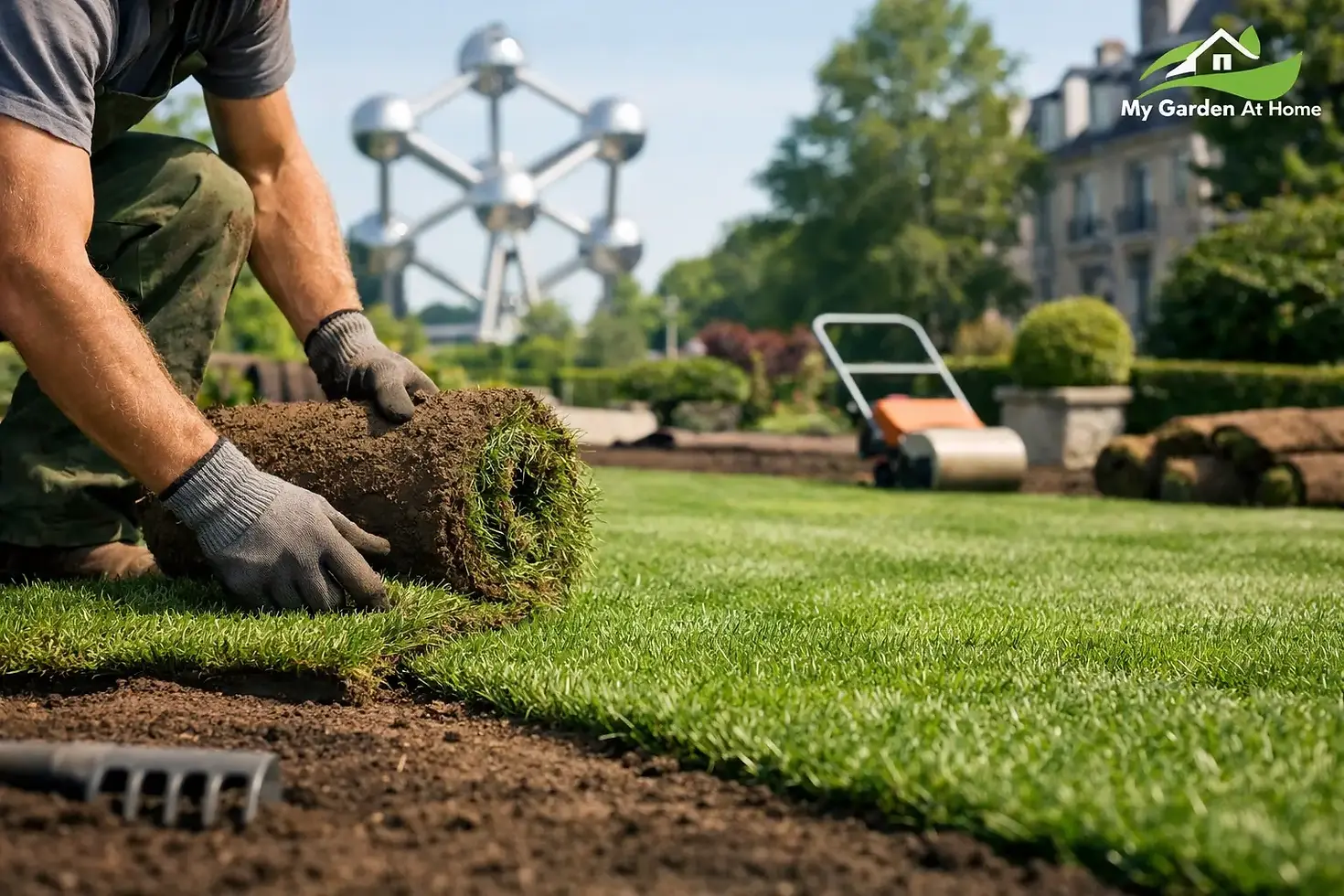
Turf Installation Brussels: A Lawn That Lasts
- Garden At Home
- 22 hours ago
- 6 min read
A newly laid lawn can change the way a garden feels in a single day. Turf installation Brussels homeowners request most often is not about covering bare soil quickly. It is about replacing a patchy, muddy or tired-looking area with a level green space that is ready for family life, entertaining and everyday enjoyment.
For many local properties, the problem starts gradually. A lawn thins beneath mature trees, turns uneven after building work, or becomes more moss than grass after a wet Belgian winter. By spring, homeowners can be left looking at compacted soil, weeds and muddy tracks instead of the garden they imagined. Fresh turf is often the fastest route back to a clean, finished result, but only when the ground beneath it is properly prepared.
A Brussels garden before and after new turf
A recent garden job began with a familiar picture: a small rear garden where the lawn had become worn, uneven and difficult to use. The owners had moved into the property and wanted an outdoor space their children could enjoy straight away. The old grass had large bare sections near the terrace, while rainwater collected in a shallow dip along one edge.
Simply laying turf over the existing surface would have looked better for a short time, but it would not have solved the cause of the problem. The team first removed the old lawn and weeds, then worked the compacted ground to improve the surface. The low section was corrected, stones and roots were cleared, and fresh topsoil was added where needed. Once the area was levelled and firmed, the turf could be laid in tight, staggered rows for a natural finish.
The difference was immediate. What had been a tired brown-and-green patch became a neat lawn that connected the terrace to the planted borders. More importantly, the garden had a sound base for the months ahead. The owners received clear advice on watering and when to use the lawn for the first time, rather than being left with a beautiful surface and no plan for protecting it.
Why turf installation needs proper preparation
Good turf is visible from the first day. Good preparation is what keeps it looking good after the first summer, through winter rain and into the following year.
Brussels gardens often have particular challenges. Some are shaded by neighbouring buildings or established trees. Others have heavy, compacted soil from construction work, limited access through a narrow side passage, or uneven ground where previous landscaping has settled. Each garden needs to be assessed before a realistic quotation and work plan can be given.
The preparation normally includes removing the existing grass and weeds, clearing debris, loosening the soil, improving it where necessary, levelling the area and creating a firm surface. Turf needs close contact with the soil below so that its roots can establish. If the ground is lumpy, too loose or poorly drained, the new lawn may struggle even if the turf itself is excellent.
Drainage deserves particular attention. A lawn that stays waterlogged after rain is not always a turf problem. It may need regrading, soil improvement or a more considered solution around downpipes and hard surfaces. In a heavily shaded garden, it may also be sensible to discuss whether turf is the best choice for every corner. A planted bed, shade-tolerant ground cover or gravel detail can be more practical than repeatedly repairing grass that cannot get enough light.
Timing a lawn project in Belgium
Spring and early autumn are usually strong times for laying turf because temperatures are moderate and natural rainfall can help establishment. That said, turf can often be installed at other times when ground conditions are suitable and there is no frost. Summer work is possible, but it requires more disciplined watering, especially during dry spells.
The right timing depends on the condition of the garden and how soon you need to use it. If a property is being prepared for a move, a garden event or a rental handover, a professional turf installation can give a quick visual improvement. If the area is still being used for building work or access, it is usually wiser to wait until heavy traffic has finished. Fresh turf and repeated wheelbarrow routes are not a good combination.
What happens on the day of turf installation
A properly organised installation is practical from start to finish. Materials need to arrive in good condition, access needs to be considered, and the turf should be laid promptly rather than sitting rolled up for too long.
Once the prepared surface is ready, the first rolls are set along a straight edge, usually beside a terrace, path or boundary. Each following row is staggered so the joins do not line up, much like brickwork. The turf is fitted closely without stretching it, then trimmed neatly around borders, trees and garden features. The finished lawn is pressed down to remove air pockets and watered thoroughly.
For gardens with awkward access, planning matters just as much as the turf itself. A rear garden reached only through a house, a narrow gate or a shared entrance requires care to protect surrounding areas and keep the work moving efficiently. This is one reason homeowners often prefer an insured garden team rather than attempting to transport rolls, soil and tools through the property themselves.
The first weeks make the difference
Fresh turf needs regular attention at the beginning, but the routine is straightforward. Water it deeply enough to keep the soil beneath the turf moist, particularly during warm or dry weather. Light surface sprinkling is less useful than a proper soak that encourages roots to grow downwards.
Avoid heavy use while the roots establish. Children, pets and garden furniture can leave marks on soft turf, and repeated walking can disturb the joins. In most cases, the lawn should not be mown until the turf has rooted and the grass has grown enough to justify a light first cut. Keep the mower blades sharp and avoid taking too much height off at once.
A new lawn does not need to look perfect every day to be healthy. Small gaps at joins, slight colour changes or edges that need tidying can occur as the turf settles. Consistent watering, sensible mowing and early weeding help it develop into a more even surface. If a heatwave, prolonged rain or unexpected shade affects the area, the care routine may need adjusting.
Turf or grass seed?
Turf offers an immediate green result and helps stabilise bare soil quickly. It is usually the preferred option for homeowners who want a usable-looking garden without waiting months for seed to fill in. Grass seed costs less in materials and can be a suitable choice for larger areas or projects with a flexible timeline, but it needs more patience and careful protection during germination.
Neither choice is automatically right for every garden. Turf suits a fast transformation and a clear before-and-after result. Seed can make sense where budget is the main concern, where access is difficult, or where the lawn can be kept off limits while it establishes. A site visit helps identify the practical option rather than choosing on appearance alone.
A lawn that fits the rest of the garden
The best finished lawns do not feel separate from the garden around them. They sit level with the terrace, meet borders cleanly and leave space for planting, play or outdoor dining. For small city gardens, a neat lawn can make the entire space feel larger and calmer. For larger family gardens, it provides a central area that is easier to maintain and enjoy.
My Garden At Home can handle the work from clearing an old lawn through to preparation, turf laying and ongoing lawn care. For homeowners, expats and property managers, that means one reliable point of contact, clear communication and practical help after the installation rather than a rushed handover.
If your garden is currently more mud, moss or weeds than lawn, a well-prepared turf project can provide a genuine fresh start. Send photos of the space and explain what you would like to achieve. A clear assessment at the beginning is the best way to create a lawn that still looks inviting after the first busy season.
Contact My Garden At Home
• WhatsApp: +32 466 900 281 • Email: info@gardenathome.be • Phone: +32 2 808 70 31 • Website: mygardenathome.be


