


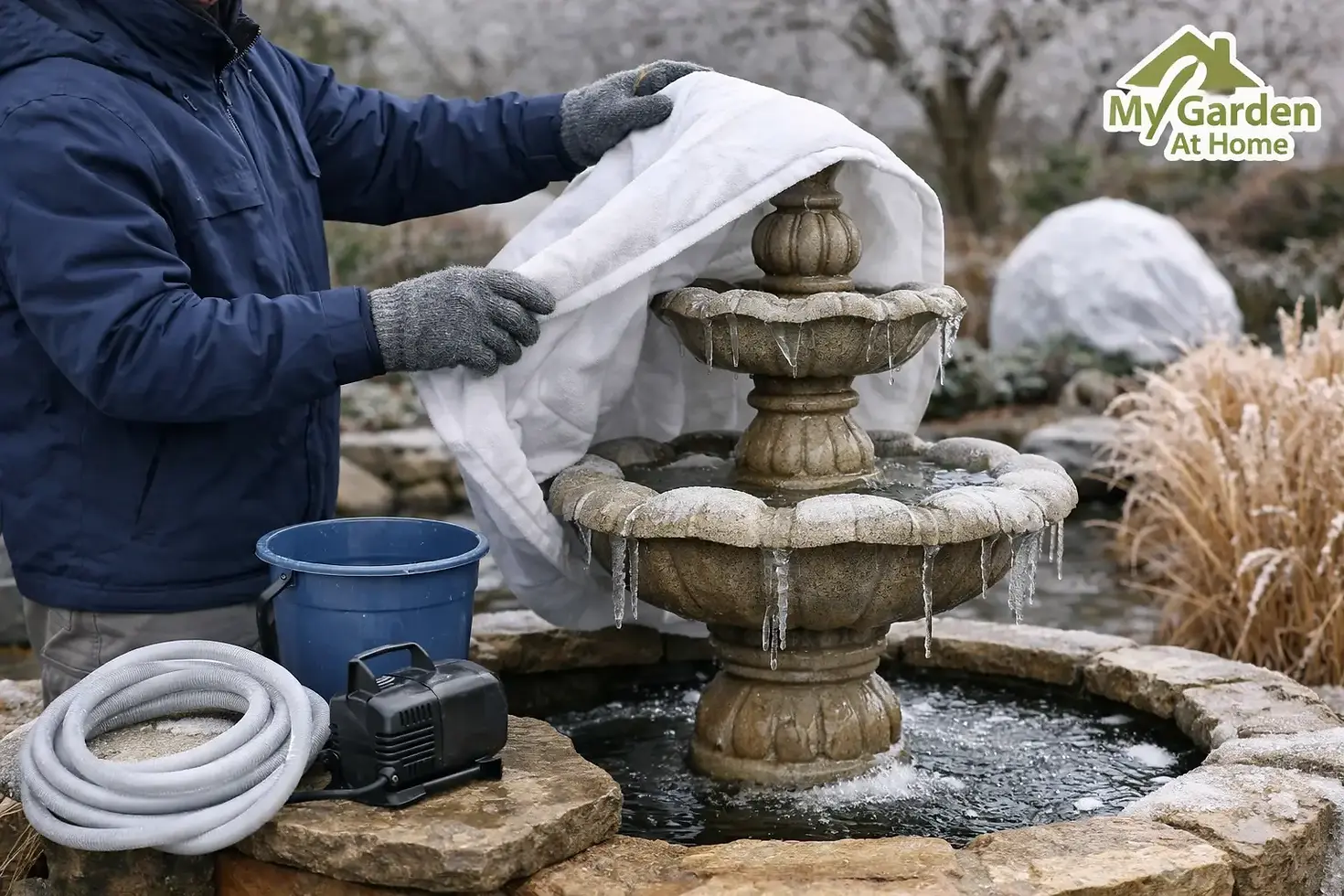
Winterising Outdoor Water Features Before Frost
- Garden At Home
- 2 hours ago
- 5 min read
The first hard frost can turn a peaceful pond, fountain or terrace water feature into an expensive spring repair. Winterising outdoor water features is not simply a matter of switching off a pump. Water left in narrow pipes, pump housings and decorative bowls expands as it freezes, putting pressure on parts that were never designed to flex.
For homeowners and property managers in Belgium, the best time to act is before overnight temperatures regularly approach freezing. A few careful jobs now can protect the feature’s appearance, prevent leaks and make reopening it in spring far less stressful.
Why frost causes damage so quickly
A running water feature may look resilient, but much of its equipment is hidden. Flexible hoses can split, seals can shift, and a pump left in a shallow basin may suffer when the surrounding water freezes solid. Stone, ceramic and concrete features are also vulnerable where water collects in tiny surface cracks. Repeated freezing and thawing gradually widens those cracks, leading to flaking, loose pointing or broken edges.
The level of protection needed depends on the feature. A deep, established fish pond needs different care from a small self-contained fountain on a terrace. A pond with wildlife cannot simply be emptied, while a decorative wall fountain is usually safest drained completely. The key is to deal with standing water, exposed equipment and debris before cold weather settles in.
Winterising outdoor water features step by step
Start with a clean basin and clear water flow
Remove fallen leaves, dead plant material and loose debris from the pond, fountain or rill. Decaying material affects water quality and can block filters as the season changes. In a pond, use a net carefully rather than disturbing fish or pulling at established marginal plants.
For fountains and smaller features, clean the basin thoroughly once the pump is removed. Check that outlets, overflow channels and drainage holes are clear. A blocked overflow can leave rainwater sitting in the wrong place, which is exactly what causes trouble during a freeze.
Protect or remove the pump
For most ornamental fountains, the safest choice is to switch off the pump, disconnect it from the power supply and remove it for cleaning. Rinse away silt, inspect the impeller and store the pump somewhere dry and frost-free. Do not lift it by its cable.
Pond pumps are more dependent on the system and the depth of the pond. In some deep ponds, a suitable pump may remain submerged below the likely ice level, but only if the manufacturer’s instructions allow it and the circulation setup is appropriate for winter. If there is any uncertainty, professional advice is sensible. A pump that runs in shallow water or an exposed filter box is much more likely to be damaged.
Drain fountain bowls, pipes and reservoirs
A self-contained fountain should normally be drained down for winter. Empty the bowl and reservoir, then allow the pipework to drain as far as possible. If the design has low points where water remains trapped, those areas need particular attention. Simply tipping out the visible water is not always enough.
Leave drainage plugs open where appropriate, provided they will not become blocked by leaves. Store removable nozzles, lights and small fittings together in a labelled container. This small bit of organisation avoids the familiar spring problem of having a perfectly clean feature but no idea where the essential fitting has gone.
Cover delicate finishes without trapping moisture
Ceramic urns, lightweight resin features and ornate statues benefit from protection, especially if they hold water. A breathable cover is generally better than wrapping an item tightly in plastic, which can trap dampness against the surface. Raise removable bowls or planters slightly off the ground where possible so they are not sitting in pooled rainwater.
Heavy stone features are often best left in place after draining and cleaning. Cover only when the material and design call for it. A badly fitted cover can rub against the surface in wind or create a damp pocket, so protection should be secure but not airtight.
What to do differently for ponds with fish and wildlife
A garden pond remains a living habitat in winter. Avoid draining it unless there is a serious structural reason to do so. Fish need stable, deeper water, while frogs, insects and other wildlife may be using the pond margins or sediment.
The priority is gas exchange. In prolonged freezing conditions, leave a small opening in the ice using a purpose-made pond heater, aerator or floating device. Never smash ice with a hammer. The shock waves can harm fish, and the impact can damage pond liners or edging.
Cut back dead foliage that would otherwise collapse into the pond, but do not strip every plant bare. Stems and cover around the pond provide shelter for wildlife. If a net is needed to catch leaves, keep it taut and check it regularly so birds and small animals cannot become entangled.
A Leuven garden job: small checks, major difference
At a recent garden maintenance visit in Leuven, a homeowner asked for help after noticing their courtyard fountain had stopped circulating properly. The feature was attractive but exposed: a shallow stone bowl, a hidden reservoir and a narrow pipe running along the base of a wall. Leaves had collected around the intake, and water remained in a low section of pipe.
Before the cold weather arrived, the team cleared the basin, removed and cleaned the pump, drained the reservoir and checked the pipework for trapped water. They also cleared the surrounding paving channels, where rainwater had begun to gather against the fountain base. The after-result was simple but valuable: a clean, protected feature and a tidy courtyard ready for winter, rather than a cracked bowl and a pump replacement in spring.
This is often how preventative work pays off. It is rarely dramatic on the day, but it stops small maintenance issues becoming a larger repair when access, weather and replacement parts are less convenient.
Do not forget the area around the feature
A water feature is only as protected as its surroundings. Clear leaves from nearby drains and gutters, particularly on terraces and compact urban gardens where water has limited places to go. Check paving for loose joints, and keep soil or mulch from building up against a fountain base.
Also inspect the electrical connection. Outdoor sockets should be suitable for exterior use, and cables should not lie in standing water or under heavy pots. If you are unsure whether a cable, connection or pump is safe, leave it switched off and have it checked. Water and electrics are not a worthwhile do-it-yourself gamble.
When professional help makes sense
Many small fountains can be prepared in an afternoon, but larger ponds, built-in water walls and features with underground reservoirs need more careful handling. It also makes sense to arrange help when the feature has already developed a leak, the pump is noisy, water quality is poor, or access is difficult.
My Garden At Home provides practical seasonal garden care for homes and properties, including clearing surrounding planting, managing leaves and preparing outdoor areas for winter. For features that need a careful clean-up and coordinated garden maintenance, an insured team can help keep the work organised and the space looking cared for.
A dry, clean fountain and a well-managed pond may not attract much attention during winter. That is exactly the point. When the first mild days return, your outdoor space should be ready to enjoy, not waiting for a repair.
Contact My Garden At Home
• WhatsApp: +32 466 900 281 • Email: info@gardenathome.be • Phone: +32 2 808 70 31 • Website: mygardenathome.be


